Gable Roof Repair: Where Melbourne's Most Common Roof Type Fails First and How to Fix Each Problem
- Blog
- September 29, 2026
Quick Overview:
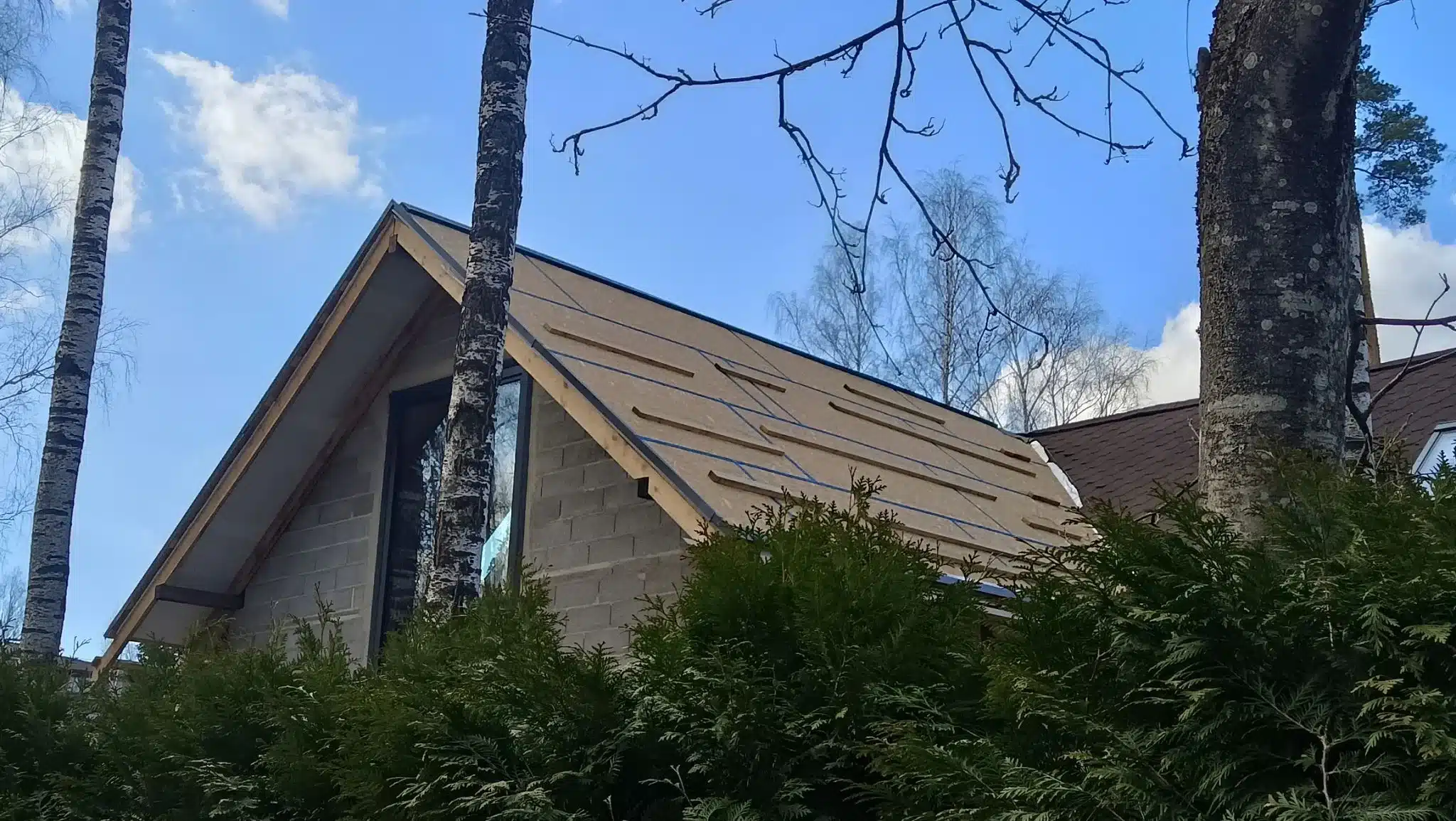
Gable roof repair addresses the specific vulnerabilities of the most common roof design in Melbourne’s northern suburbs. A gable roof has two sloping planes that meet at a central ridge, with vertical triangular walls (gable ends) at each side. This simple, effective design handles rain well and provides excellent roof cavity ventilation, but it has specific weak points that develop problems over time. The most common gable roof repair issues are ridge capping failure along the peak (cracked mortar, loose caps), barge board deterioration at the gable ends (timber decay, paint failure, water damage), gable end flashing failure where the roof meets the vertical gable wall, wind damage from the exposed gable ends catching wind like a sail, and valley failures where gable extensions create internal angles. At Roof Restoration Northern Suburbs, gable roof repair and restoration is the majority of our work because gable roofs dominate the housing stock across Melbourne’s northern suburbs, from 1950s brick veneer homes to modern builds.
What Makes Gable Roofs Different
A gable roof’s design creates specific strengths and specific vulnerabilities that affect how and where it fails.
The ridge line runs the full length of the roof peak. On a gable roof, this is typically the longest uninterrupted ridge line of any common roof type. The ridge caps along this line are held in place with mortar bedding and sealed with flexible pointing. The longer the ridge, the more linear metres of mortar are exposed to thermal cycling, UV, and weather, and the more mortar that eventually cracks and fails. Read the roof repointing cost guide for what ridge cap repair involves and costs.
Table of Contents
ToggleThe gable ends are the vertical triangular walls at each end of the roof where the two roof planes terminate. Unlike a hip roof (where the roof slopes down on all four sides), the gable end is a flat, vertical surface exposed to weather from the side. This makes the junction between the roof tiles and the gable end wall a critical weatherproofing point. The flashing, barge boards, and sealant at this junction are all vulnerable to failure.
Barge boards (also called verge boards or rake boards) run along the sloping edge of the roof at the gable end, covering the ends of the roof battens and providing a finished edge. On older Melbourne homes, these are typically timber and subject to paint failure, moisture absorption, and timber decay over decades.
Wind exposure is greater on gable roofs than hip roofs because the flat gable end acts like a wall catching wind. During storms, wind pressure on the gable end creates uplift force on the roof tiles near the gable, which can displace tiles, lift ridge caps, and even cause structural damage in severe events.
The Five Most Common Gable Roof Repair Issues
Each problem has specific causes, warning signs, and fixes.
| Problem | Where It Occurs | Warning Signs | Fix |
|---|---|---|---|
| Ridge capping failure | Along the peak (ridge line) where the two roof planes meet | Cracked mortar visible from the ground, mortar fragments in gutters, loose ridge caps, gaps along the ridge line | Repointing and rebedding with flexible pointing compound |
| Barge board deterioration | Along the sloping edge of each gable end | Paint peeling, timber softening, visible decay, gaps between barge board and roof tiles | Repair or replace the barge board, repaint, reseal the junction |
| Gable end flashing failure | Where the roof tiles meet the vertical gable wall | Water stains on internal walls near the gable end, damp in the roof cavity near the gable, flashing lifting or corroded | Remove and replace failed flashing, reseal the roof-to-wall junction |
| Wind-displaced tiles near the gable edge | Tiles along the outer edge of the roof near the gable end | Tiles visibly shifted, gaps between edge tiles, rattling during wind, tile fragments in gutters | Resecure tiles with clips, replace any cracked or broken tiles |
| Valley failure (on L-shaped or T-shaped gable roofs) | Where a gable extension meets the main roof, creating an internal angle (valley) | Rust stains below the valley, ceiling stains near the valley, valley corrosion visible from inside the roof cavity | Valley replacement with new Colorbond or zincalume |
Ridge Capping on Gable Roofs: Why It Fails and What to Do
Ridge capping failure is the most common repair issue on gable roofs because the ridge line is typically longer than on any other roof type, which means more mortar exposed to more weather for more years.
The original cement mortar bedding that holds the ridge caps in place cracks and crumbles over time from thermal cycling (Melbourne’s temperature swings cause repeated expansion and contraction that rigid cement cannot accommodate), UV degradation, and general ageing. Once the bedding fails, the caps sit loose on the ridge, water enters through the gaps, and wind can displace the caps entirely.
The fix is repointing and rebedding: the old mortar is removed, fresh bedding is laid, the caps are repositioned, and flexible pointing compound is applied along both edges. Flexible pointing moves with the thermal cycling instead of cracking against it, which is why it outlasts rigid cement by years. Read the roof repointing cost guide for detailed pricing.
“On a standard gable roof in Melbourne’s northern suburbs, the ridge line is typically 12 to 18 metres long. That is 12 to 18 metres of mortar exposed to sun, rain, wind, and thermal cycling for 25 to 30 years. When that mortar fails, water enters at the highest point of the roof and runs down into the cavity. It is the first thing we check on every gable roof inspection.”
Barge Board Problems: The Gable End’s Weak Point
Barge boards are unique to gable and gable-variant roofs. They run along the sloping edge of the roof at each gable end, covering the exposed ends of the roof battens and providing a finished, weatherproof edge.
On older Melbourne homes (pre-1990s), barge boards are almost always timber. Over decades of exposure to sun, rain, and wind on a surface that receives direct weather from the side (unlike tiles, which are designed for it), timber barge boards deteriorate.
What goes wrong: The paint coating breaks down from UV and weather exposure. Once the paint fails, moisture penetrates the bare timber. The timber absorbs water, swells, then dries and shrinks with each wet-dry cycle. Over years, this cycling causes the timber to split, warp, and eventually develop decay. Decayed barge boards allow water behind the fascia and into the roof cavity at the gable end.
What the fix involves: If the timber is still structurally sound (surface decay only), the barge board is sanded back, primed, filled where needed, and repainted with an exterior-grade paint system. If the timber has decayed through, the barge board is replaced with new treated timber or a composite material that does not absorb moisture. The junction between the barge board and the roof tiles is resealed to prevent water entry.
Barge board repair is often combined with broader roof restoration work because the barge boards are being accessed during repointing and roof painting anyway. Addressing them during the restoration saves on separate access costs.
Gable End Flashing: Where the Roof Meets the Wall
On many gable roofs, particularly on extensions and L-shaped designs, the sloping roof meets a vertical gable wall. The junction between the tiles and the wall is sealed with metal flashing (typically lead or Colorbond) that directs water away from the join and down the roof surface.
When this flashing fails (from corrosion, lifting, cracking, or poor original installation), water enters the roof cavity at the junction. Because the gable end is often at the side or rear of the house, this leak can go unnoticed for months or years before a ceiling stain appears inside.
Signs of gable end flashing failure: Damp patches on interior walls near the gable end, water stains on ceilings in rooms adjacent to the gable wall, visible rust or lifting of the flashing when viewed from the roof, and daylight visible at the junction from inside the roof cavity.
The fix involves removing the failed flashing, preparing the wall and tile surfaces, and installing new flashing that is properly stepped into the wall mortar joints (or sealed against the wall surface) and extends adequately under the tiles. This is a precise job that requires experience to ensure the new flashing sheds water correctly without creating new weak points.
Wind Damage on Gable Roofs
Gable roofs are more vulnerable to wind damage than hip roofs because the flat gable end catches wind directly.
During storms, wind hitting the gable end creates positive pressure on the windward side and negative pressure (suction) on the leeward side and across the roof planes. This uplift force is strongest at the ridge line, the gable edges, and the corners where the roof meets the gable wall.
What wind does to a gable roof: Loose tiles along the gable edge are the first to lift because they have the least interlocking support (the edge tile only interlocks on three sides, not four). Ridge caps with failed mortar are lifted from their bed and can be thrown from the roof entirely. Barge boards can be pulled away from the roof structure if their fixings have corroded. In severe events, the gable end wall itself can fail if it is not adequately braced, though this is rare on well-constructed homes.
Preventive measures: Ensure all edge tiles are clipped (not just relying on gravity). Maintain ridge capping mortar in sound condition through regular repointing. Check barge board fixings and replace corroded screws. After any significant wind event, inspect the gable end and edge tiles from the ground for displacement. For post-storm damage, emergency roof repairs provide immediate temporary protection while permanent repairs are arranged. Read how to stop a roof leak temporarily for emergency steps.
Gable Roof Maintenance: Preventing Problems Before They Start
Regular maintenance catches gable roof issues at the early, inexpensive stage before they progress to costly damage.
Annual visual check from the ground. Walk around the house and look up at the ridge line (check for gaps, crooked caps, missing mortar), the barge boards (check for paint peeling, timber discolouration, gaps between barge and tiles), the gable end flashing (check for lifting, rust, or visible gaps), and the tiles along the gable edge (check for displaced or shifted tiles).
Biannual gutter cleaning. Gable roofs with overhanging trees collect debris in gutters that block drainage and cause overflow. Gutter overflow wets the fascia and barge boards repeatedly, accelerating their deterioration. Gutter guards reduce blockage between cleans. Read are gutter guards worth it for the cost-benefit analysis.
Professional roof inspection every two to three years. A professional inspection examines every component up close: ridge capping condition, tile security, valley condition, flashing integrity, barge board health, and the roof cavity from inside. The inspection identifies issues that are invisible from the ground. The signs of roof damage Melbourne guide covers the full checklist.
Post-storm inspection after significant wind events. Gable roofs are more vulnerable to wind than hip roofs. After any storm with strong gusts, check the gable end, ridge line, and edge tiles from the ground. If anything looks displaced, book a professional inspection rather than climbing up yourself. Read can you walk on roof tiles for why roof access should be left to professionals.
The roof maintenance checklist covers the complete annual maintenance schedule for all roof types including gable.
When to Repair vs When to Restore
Some gable roof problems are isolated repairs. Others are signs that the roof needs a broader restoration.
| Situation | Best Approach | Why |
|---|---|---|
| One or two loose or cracked tiles near the gable edge | Targeted tile repair | Isolated damage, rest of the roof is sound |
| Ridge capping mortar failing but tiles and coating are in good condition | Standalone repointing and rebedding | Mortar has a shorter lifespan than tiles; repointing alone extends the roof’s weatherproofing |
| Barge boards deteriorating but roof structure and tiles are sound | Barge board repair or replacement, repaint | Localised issue at the gable ends |
| Multiple issues: mortar failing, coating peeling, tiles cracking, valleys corroding | Full roof restoration | Everything addressed in one project. Saves mobilisation cost. Most cost-effective long-term. |
| Severe structural damage, widespread tile failure, timber decay in framing | Assess whether restoration or roof replacement is more cost-effective | A roof inspection determines the tipping point |
For full pricing on broader restoration work, the roof restoration cost Melbourne guide covers every variable. For understanding how long your roof’s components last, the roof lifespan guide covers every material. For coating options during a restoration, the best roof paint Australia guide compares products, and the best colour for roof paint guide covers colour selection.
Gable Roof Repair: Where It Fails First and How to Fix It
The five most common problems on Melbourne's most common roof type, and what each repair involves.
Gable Roof Anatomy: The Vulnerable Points
Ridge Line
Longest uninterrupted ridge of any common roof type. More mortar exposed to more weather. Cracks and fails over time.
#1 FAILURE POINT
Gable Ends
Flat, vertical surface exposed to side weather. Flashing, barge boards, and sealant at the roof-to-wall junction are all vulnerable.
Barge Boards
Timber boards along the sloping gable edge. Exposed to direct weather. Paint fails, timber absorbs moisture, decay develops.
Five Common Gable Roof Problems
Ridge Capping Failure
Mortar cracks and crumbles. Caps loosen. Water enters at the peak.
Fix: Repoint and rebed
Barge Board Decay
Paint fails, timber absorbs moisture, softens, splits, and decays over time.
Fix: Repair or replace
Gable End Flashing
Flashing lifts, corrodes, or fails at the roof-to-wall junction. Water enters the cavity.
Fix: Replace flashing
Wind-Displaced Tiles
Edge tiles near the gable lift in storms. Only three-sided interlock at the edge.
Fix: Clip and resecure
Valley Failure
On L-shaped or T-shaped gable roofs. Valley iron corrodes. Water enters at the internal angle.
Fix: Replace valley
Gable vs Hip: Wind Vulnerability
Gable Roof
Flat gable end catches wind directly
Creates uplift on edge tiles and ridge caps
Edge tiles only interlock on three sides
Barge boards vulnerable to wind lift
MORE WIND VULNERABLE
Hip Roof
Slopes on all four sides, deflects wind
No flat end to catch wind pressure
All edge tiles interlock on four sides
No barge boards to maintain
MORE WIND RESISTANT
Maintenance Checklist for Gable Roofs
Annually
Ground-level visual check: ridge line, barge boards, gable end flashing, edge tiles.
After Storms
Check gable end, edge tiles, and ridge for displacement. Book inspection if anything looks shifted.
Biannually
Gutter cleaning. Overflow wets fascia and barge boards, accelerating deterioration.
Every 2 to 3 Years
Professional roof inspection. Every component checked up close. Roof cavity examined from inside.
💡 The Bottom Line
Gable roofs are simple, effective, and reliable, but they have specific weak points that other roof types do not share. The long ridge line, the exposed gable ends, the barge boards, and the edge tiles near the gable are all vulnerable to weather and wind. Knowing where your gable roof fails first means you can catch problems early, when the fix is straightforward and the cost is small.
roofrestorationnorthernsuburbs.com.au | Roof Restoration Northern Suburbs
Frequently Asked Questions
Q1. What is the most common problem on gable roofs in Melbourne?
Ridge capping failure is the most common issue because gable roofs typically have the longest uninterrupted ridge line of any common roof type, exposing more mortar to weather and thermal cycling. When the mortar cracks and crumbles, water enters at the peak of the roof and ridge caps become loose or displaced. Repointing and rebedding with flexible pointing compound is the standard fix.
Q2. Are gable roofs more prone to wind damage than hip roofs?
Yes. The flat, vertical gable end catches wind directly, creating uplift forces that hip roofs (which slope on all four sides) largely deflect. Edge tiles near the gable end, ridge caps along the peak, and barge boards are all vulnerable to wind displacement during storms. Ensuring edge tiles are clipped and ridge capping mortar is maintained reduces the risk. After storms, check the gable end from the ground for displaced tiles or lifted flashing.
Q3. How much does gable roof repair cost in Melbourne?
The cost depends on the specific repair needed. Individual tile repairs cost less than barge board replacement, which costs less than full repointing, which costs less than a comprehensive roof restoration. The roof restoration cost Melbourne and roof repointing cost guides cover detailed pricing. Contact Roof Restoration Northern Suburbs for a free inspection and quote.
Q4. How often should I inspect my gable roof?
A visual check from the ground annually (and after any significant storm) catches displaced tiles, failing mortar, and barge board deterioration early. A professional roof inspection every two to three years provides a detailed, up-close assessment of every component. The roof maintenance checklist covers the complete schedule.
Q5. Can gable roof problems be fixed without a full restoration?
Yes. Isolated issues (a few loose tiles, ridge capping failure with sound tiles, barge board deterioration with the rest of the roof in good condition) can be repaired individually. However, when multiple issues are present simultaneously (mortar failing, coating peeling, tiles cracking, valleys corroding), addressing everything in a single roof restoration is more cost-effective than fixing each issue separately over time.
Do not wait for a small problem to become a big one. If you have spotted broken, cracked, or missing tiles on your Melbourne northern suburbs home, the team at Roof Restoration Northern Suburbs is ready to help. Get in touch today for a no-obligation inspection and quote.
Contact us today for a free, no‑obligation roof assessment and quote.
If you want a thorough and safe roof cleaning, don’t hesitate to reach out to us for expert services. We can handle everything from roof cleaning to roof restoration.
- 0489 088 778
- info@roofrestorationnorthernsuburbs.com.au
- 32 Milleara Road Keilor East VIC 3033
- Mon-Sat : 8AM – 5PM