Roof Repointing Cost in Melbourne: What Drives the Price, What It Includes, and Why Waiting Costs More
- Blog
- September 22, 2026
Quick Overview:
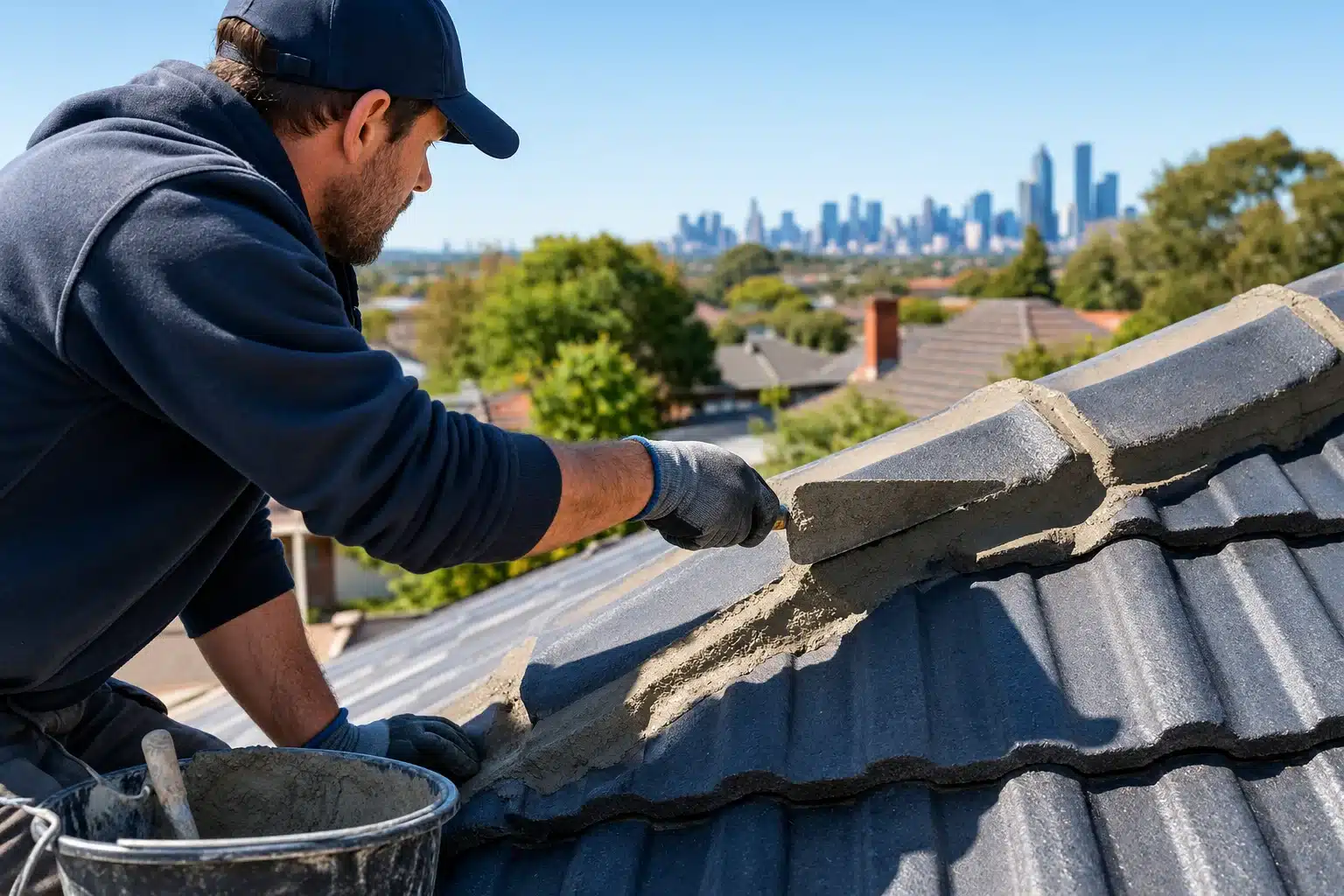
Roof repointing cost in Melbourne typically ranges from $1,500 to $4,500 for a standard home, depending on the total length of ridge and hip capping, the roof’s accessibility and pitch, whether rebedding (replacing the mortar bed underneath the cap) is needed alongside repointing (replacing the visible pointing on top), the condition of the existing mortar, and whether any ridge or hip tiles need replacing. Repointing alone (removing old flexible pointing and applying new) is less expensive than combined rebedding and repointing (removing old rigid mortar bedding, relaying the caps on fresh bedding, then applying flexible pointing on top). Most Melbourne roofs over 20 years old need both because the original cement bedding has cracked and separated alongside the pointing. At Roof Restoration Northern Suburbs, repointing and rebedding is our most frequently requested standalone service and a standard component of every roof restoration we deliver across Melbourne’s northern suburbs.
Rebedding vs Repointing: Understanding What You Are Paying For
These two terms are often used interchangeably, but they are different jobs with different costs.
Rebedding is the structural step. It involves removing the ridge or hip cap tiles, chipping away the old cement mortar bed underneath, relaying fresh mortar bedding, and repositioning the cap tiles firmly into the new bed. The bedding is the thick layer of mortar that holds the cap tile in its correct position and creates the waterproof seal between the cap and the field tiles on either side.
Table of Contents
ToggleRepointing is the finishing step. It involves applying a flexible pointing compound (typically a polymer-modified acrylic or similar flexible sealant) along the edges where the cap tile meets the field tiles. The pointing seals the junction and accommodates the thermal movement that causes rigid cement pointing to crack over time.
Why this distinction matters for cost:
| Service | What It Involves | Typical Cost Range | When It Is Needed |
|---|---|---|---|
| Repointing only | Remove old pointing, apply new flexible pointing over existing sound bedding | $800 to $2,000 | Bedding is still intact and firmly holding the caps, only the surface pointing has failed |
| Rebedding and repointing (combined) | Remove caps, replace bedding mortar, reposition caps, apply new flexible pointing | $1,500 to $4,500 | Bedding has cracked, crumbled, or separated from the caps (most common on roofs over 20 years) |
| Rebedding, repointing, and cap replacement | Full rebedding and repointing plus replacing cracked or broken ridge/hip cap tiles | $2,000 to $5,500+ | Caps are damaged and bedding has failed |
Most quotes you receive will be for combined rebedding and repointing because, on the majority of Melbourne roofs that need this work, the bedding underneath has failed alongside the pointing on top. A quote for “repointing only” on a roof where the bedding is also compromised is an incomplete fix that will fail prematurely because the caps are not properly secured in their bed.
What Affects Roof Repointing Cost
Several factors determine where your project falls within the price range.
Total ridge and hip length. This is the primary cost driver because repointing is priced per linear metre of ridge and hip line. A simple gable roof with a single ridge line has less capping to repoint than an L-shaped or T-shaped roof with multiple ridges and hip lines. Complex roof designs with valleys, multiple hips, and intersecting ridges have the most capping and therefore the highest repointing cost.
Roof pitch and accessibility. Steeper roofs require more safety equipment, slower work, and sometimes scaffolding or elevated work platforms. A low-pitched roof that can be safely walked is faster and less expensive to repoint than a steep pitch that requires harnesses and anchor points.
Roof height. Single-storey homes are more accessible than double-storey homes. Multi-storey access adds to the labour and safety equipment cost.
Condition of existing bedding. If the old bedding comes away cleanly, the rebedding is straightforward. If the bedding is heavily calcite-bonded to the tiles or has been previously patched with incompatible materials, removal takes longer and costs more.
Cap tile condition. If ridge or hip cap tiles are cracked, chipped, or broken, they need replacing. Sourcing matching cap tiles for discontinued profiles adds time and material cost. For common profiles, matching caps are readily available. The broken roof tile replacement guide covers tile replacement in detail.
Whether repointing is done standalone or as part of a restoration. This is important for value. Repointing done as part of a full roof restoration (alongside cleaning, tile repairs, valley replacement, and painting) costs less per metre than standalone repointing because the tradesperson is already on the roof with equipment set up. The roof restoration cost Melbourne guide covers how repointing fits within a full restoration budget.
Why Cement Pointing Fails
Understanding why the old pointing failed helps you appreciate why the replacement method matters.
Traditional cement pointing (used on most Melbourne roofs built before the 2000s) is a rigid material applied to a surface that moves. Roof tiles expand and contract with temperature changes. The timber frame underneath moves with moisture changes. The ridge and hip caps sit at the junction of two roof planes, which means they experience the greatest relative movement.
Rigid cement cannot accommodate this movement. Over thousands of thermal cycles across decades of Melbourne’s hot summers and cold winters, the cement cracks, separates from the tile surface, and eventually crumbles. Water enters through the cracks, runs under the cap tiles, and into the roof cavity.
This is why modern repointing uses flexible pointing compounds rather than rigid cement. Flexible pointing moves with the tiles and the frame, maintaining the seal through thermal cycling instead of cracking against it. A properly applied flexible pointing system lasts significantly longer than rigid cement ever did on the same roof.
“The biggest waste of money in roof maintenance is repointing with cement. It is cheaper per tube than flexible compound, so some operators use it to reduce their material cost. But cement cracks again within a few years, and you are paying for the same job twice. Flexible pointing costs more in materials but lasts dramatically longer because it moves with the roof.”
What the Repointing Process Involves
When you book repointing and rebedding with Roof Restoration Northern Suburbs, the process follows a specific sequence.
Step one: Roof inspection. Before any work begins, the entire roof is inspected to assess the condition of the ridge and hip capping, the state of the bedding underneath, whether any cap tiles need replacing, and whether related issues (cracked tiles, corroded valleys, damaged flashing, loose tiles) should be addressed at the same time. A roof inspection determines the full scope.
Step two: Remove old pointing and bedding. The failed flexible pointing (or rigid cement pointing) is removed from both sides of every ridge and hip cap. If rebedding is required, the cap tiles are carefully lifted off and the old mortar bedding is chipped away, leaving clean tile surfaces ready for fresh mortar.
Step three: Rebedding. Fresh mortar bedding is applied and the cap tiles are repositioned firmly into the new bed, ensuring correct alignment and a solid, level seating. Each cap is checked for correct overlap with its neighbours and proper positioning relative to the field tiles below.
Step four: Flexible pointing. Once the bedding has cured sufficiently (typically 24 hours), flexible pointing compound is applied along both edges of every ridge and hip cap tile. The pointing creates a continuous, flexible, waterproof seal along the entire ridge and hip line.
Step five: Cleanup and final check. The ridge and hip lines are checked from the ground for alignment, consistency, and completeness. Any debris from the mortar removal is cleared from the roof surface and gutters.
How to Tell If Your Roof Needs Repointing
You can check for some repointing issues from the ground.
From the ground: Look along the ridge line (the peak of the roof). If you can see gaps between the cap tiles and the field tiles, visible cracks in the pointing, pieces of mortar in the gutters or on the ground, or cap tiles that appear crooked or shifted, the pointing and potentially the bedding has failed.
From inside the roof cavity: Access through the manhole and look up at the underside of the ridge line with a torch. Daylight visible through gaps along the ridge confirms the pointing has failed. Water stains on the timbers near the ridge indicate water has been entering for some time.
After storms: Check gutters for mortar fragments. High winds dislodge crumbling mortar, and the pieces wash into the gutters during rain. Finding mortar debris in the gutters is a reliable indicator that repointing is needed.
For a complete assessment, a professional roof inspection examines every metre of ridge and hip line up close. The signs of roof damage Melbourne guide covers the full checklist. For understanding how failed pointing connects to leaks, read why is my roof leaking when it rains.
Repointing vs Full Restoration: Which Makes Sense
Sometimes standalone repointing is the right call. Sometimes a full restoration is better value.
| Scenario | Best Approach | Why |
|---|---|---|
| Pointing has failed but tiles, valleys, and paint are in good condition | Standalone repointing | No need to pay for restoration work the roof does not need |
| Pointing has failed and the roof coating is fading but tiles are sound | Repointing now, painting within 1 to 2 years | Or combine both now to save on access cost |
| Pointing, tiles, valleys, and coating all showing age | Full roof restoration | Address everything in one project. Saves mobilisation cost and extends the entire roof’s life simultaneously |
| Pointing has failed and the roof is approaching replacement age | Assess whether restoration or replacement is more cost-effective | A roof inspection determines the tipping point |
The roof restoration cost Melbourne guide covers full restoration pricing, and the roof lifespan guide covers how long each roof component is expected to last, helping you decide whether standalone repointing or a broader scope is the smarter investment.
What Happens If You Delay Repointing
Failed pointing is not an emergency in the same way a missing tile is, but delaying the fix creates a predictable cascade of escalating damage and cost.
Water entry begins. Every rain event sends water through the cracks in the failed pointing and under the ridge or hip caps. Initially, the sarking underneath catches this water.
Sarking deterioration. Concentrated water flow at the ridge line deteriorates the sarking over time. Once the sarking tears, water drips onto the timber battens and rafters below.
Timber damage. Wet timber promotes timber decay and mould growth. Battens near the ridge line soften and weaken, which affects the fixings holding the top row of tiles.
Cap tiles loosen and shift. Without intact bedding and pointing holding them in place, ridge and hip caps become loose. Wind lifts and shifts them, creating larger gaps and accelerating water entry. Read the loose roof tiles guide for the full damage cascade.
Ceiling damage. Water that has travelled through the roof cavity eventually shows as stains on the ceiling, which is typically when homeowners first notice the problem. By this point, the damage has been accumulating above the ceiling for months or years.
The cost of repointing at the first sign of failure ($1,500 to $4,500) is a fraction of the cost of repointing plus timber repairs, sarking replacement, ceiling restoration, and cap tile replacement ($5,000 to $15,000+) after the damage cascade has progressed. The roof maintenance checklist covers when to inspect and maintain every roof component proactively.
Roof Repointing Cost Melbourne: What You Need to Know
What repointing involves, what it costs, and why flexible pointing outlasts cement every time.
Rebedding vs Repointing
Rebedding
The structural step. Remove old mortar bed, reposition cap tiles on fresh mortar. Holds the caps firmly in place.
UNDERNEATH THE CAP
Repointing
The finishing step. Apply flexible pointing compound along cap edges. Creates the waterproof, flexible seal.
ALONG THE EDGES
Cost Breakdown
Repointing Only
$800 to $2K
Bedding is still sound. Only the surface pointing has failed.
Rebedding + Repointing
$1.5K to $4.5K
Bedding and pointing both failed. Most common on 20+ year roofs.
MOST COMMON
Full + Cap Replacement
$2K to $5.5K+
Bedding failed plus cracked or broken ridge/hip cap tiles need replacing.
What Affects the Price
Ridge and Hip Length
More capping = higher cost. Complex roof shapes with multiple ridges and hips cost more than simple gable roofs.
Roof Pitch and Height
Steeper pitch and multi-storey homes need more safety equipment and slower work. Adds to labour cost.
Bedding Condition
Clean removal is faster and cheaper. Heavily bonded or previously patched bedding takes longer to strip.
Cement vs Flexible Pointing
Rigid Cement Pointing
Cannot accommodate thermal movement
Cracks within 8 to 15 years
Lower material cost per job
You pay for the same job twice in half the time
Flexible Pointing Compound
Moves with the roof's thermal expansion
Lasts 15 to 20 years
Slightly higher material cost per job
One job lasts twice as long for marginally more
What Happens If You Delay
Water Entry
Rain enters through cracked pointing. Sarking catches it initially.
Sarking Fails
Concentrated water deteriorates the membrane. Water drips onto timbers below.
Timber Damage
Battens and rafters absorb moisture. Decay begins. Cap fixings weaken.
Ceiling Damage
Water stains appear. By now, damage has been accumulating for months above.
💡 The Bottom Line
Repointing at first sign of failure costs $1,500 to $4,500. Delaying until the damage cascade has progressed can cost $5,000 to $15,000+ when you add timber repairs, sarking replacement, ceiling restoration, and cap replacements. Always confirm your quote specifies flexible pointing, not rigid cement.
roofrestorationnorthernsuburbs.com.au | Roof Restoration Northern Suburbs
Frequently Asked Questions
Q1. How much does roof repointing cost in Melbourne?
Roof repointing cost in Melbourne typically ranges from $1,500 to $4,500 for a standard home when combined with rebedding (which most roofs over 20 years need). Repointing only (over sound existing bedding) ranges from $800 to $2,000. The cost depends on the total ridge and hip length, roof pitch and accessibility, condition of the existing bedding, and whether any cap tiles need replacing. Contact Roof Restoration Northern Suburbs for a free inspection and quote.
Q2. What is the difference between rebedding and repointing?
Rebedding replaces the thick mortar bed that holds ridge and hip cap tiles in position. Repointing replaces the flexible sealant applied along the edges where the cap meets the field tiles. Most Melbourne roofs over 20 years old need both because the bedding and pointing have failed together. Repointing and rebedding done together is the standard approach for a lasting result.
Q3. How long does roof repointing last?
Modern flexible pointing lasts 15 to 20 years because the material moves with the roof's thermal expansion and contraction rather than cracking against it. Traditional rigid cement pointing typically lasts only 8 to 15 years before cracking. The difference in material cost between the two is small; the difference in longevity is significant. Always confirm that your quote specifies flexible pointing, not cement.
Q4. Can I repoint my roof myself?
We do not recommend it. Repointing requires working at the highest point of the roof (the ridge line), which is the most dangerous location for falls. It also requires correct mortar selection, proper bedding technique, and the right flexible pointing product applied at the correct thickness. Incorrect DIY repointing (using the wrong mortar, applying too thin, or using rigid cement instead of flexible compound) fails within a few years and may damage the cap tiles during removal attempts.
Q5. Should I include repointing when getting my roof restored?
Yes. Including repointing in a full roof restoration is the most cost-effective timing because the tradesperson is already on the roof with all equipment set up. The repointing cost per metre is lower as part of a restoration than as a standalone job. Additionally, restoring the tiles and coating while leaving failed pointing in place means water continues entering at the ridge line, undermining the value of the restoration work done elsewhere on the roof.
Do not wait for a small problem to become a big one. If you have spotted broken, cracked, or missing tiles on your Melbourne northern suburbs home, the team at Roof Restoration Northern Suburbs is ready to help. Get in touch today for a no-obligation inspection and quote.
Contact us today for a free, no‑obligation roof assessment and quote.
If you want a thorough and safe roof cleaning, don’t hesitate to reach out to us for expert services. We can handle everything from roof cleaning to roof restoration.
- 0489 088 778
- info@roofrestorationnorthernsuburbs.com.au
- 32 Milleara Road Keilor East VIC 3033
- Mon-Sat : 8AM – 5PM