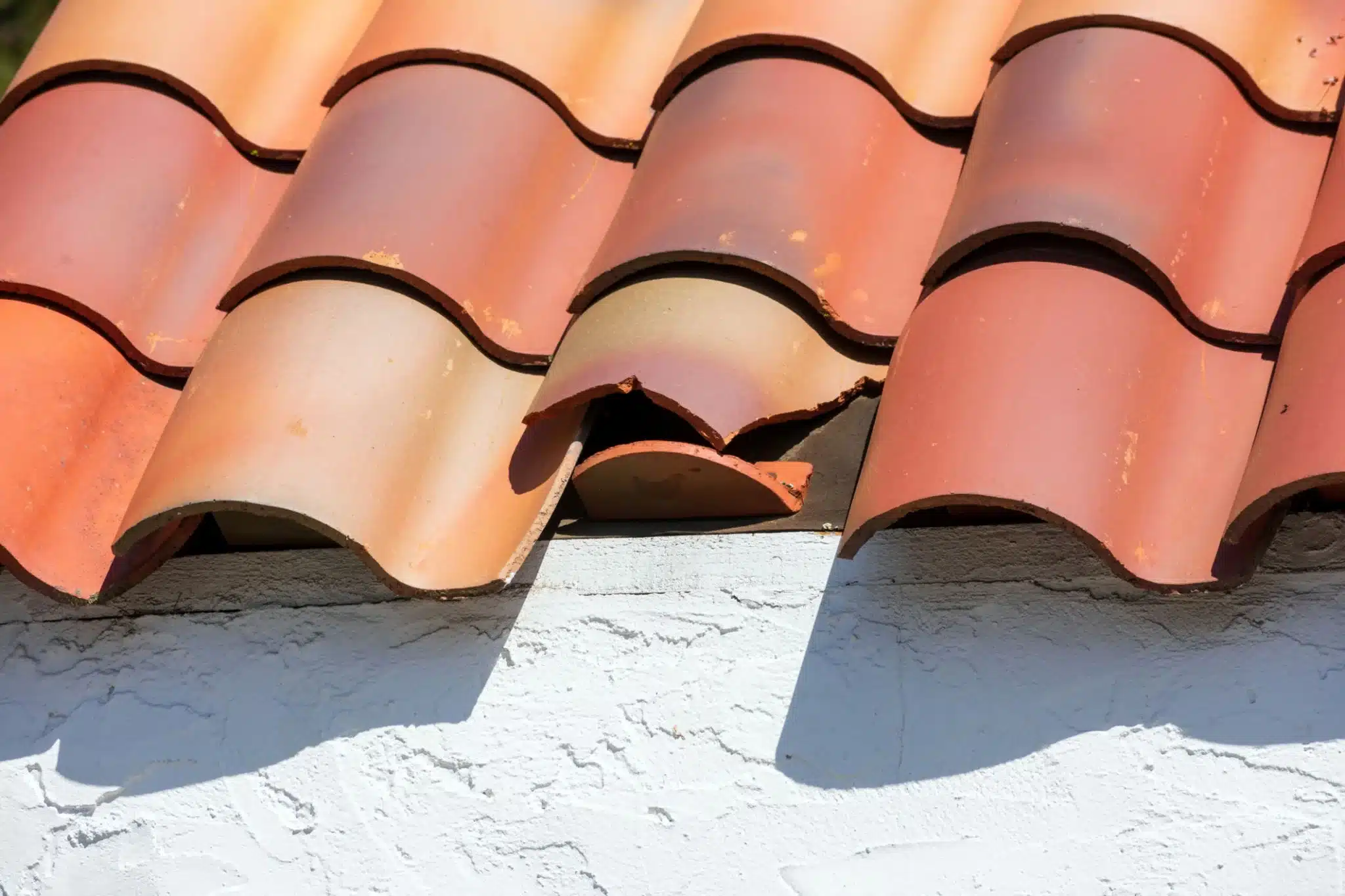
What Causes Roof Tiles to Crack?
Roof tiles do not crack randomly. Every crack has a cause, and understanding the cause helps prevent future damage.
Foot traffic is one of the most common causes. Homeowners, antenna installers, solar panel technicians, and even previous tradeworkers walking on the roof without knowing where to step crack tiles by placing weight on unsupported sections. The centre and upper portions of a tile flex under weight because they are not supported by the batten underneath. Read can you walk on roof tiles for a detailed guide on safe roof access.
Falling debris from trees, particularly during storms, cracks tiles on impact. Large branches cause obvious breakage, but even smaller branches and heavy seed pods dropped from eucalyptus trees can crack weakened tiles on older roofs.
Thermal cycling is a slow but relentless cause. Melbourne’s temperature swings between hot summer days and cold winter nights cause tiles to expand and contract repeatedly over decades. This gradual stress weakens the tile’s internal structure until hairline fractures develop, particularly on concrete tiles that have lost their protective surface coating.
Hail damage is sudden and can affect large areas of the roof at once. Melbourne experiences hail events regularly, and concrete and terracotta tiles are both vulnerable to impact cracking from hailstones.
Age and UV degradation make tiles progressively more brittle. Concrete tiles that have been exposed to Melbourne’s UV for 30 to 40 years without restoration become significantly more fragile than the same tiles were at installation. The surface coating that originally protected them has broken down, allowing moisture to penetrate the tile body, which accelerates deterioration.
“We see cracked tiles on almost every roof we inspect. What surprises homeowners is how long the crack has been there without them knowing. A tile can crack years before the leak shows up on the ceiling, and by then the timber underneath has been absorbing moisture the entire time.”
How to Tell If You Have Cracked Tiles
Most cracked tiles are invisible from ground level because the cracks are hairline thin, hidden under moss or lichen, or located on the upper portion of the tile that is overlapped by the tile above.
Signs visible from outside:
A visible crack or chip on a tile you can see from the ground (usually only on steep-pitched roofs or from an elevated vantage point). Displaced or shifted tiles that have moved out of alignment, often after a storm. Pieces of tile found in gutters or on the ground after wind events.
Signs visible from inside:
Ceiling stains that appear or worsen after rain are the most common indicator. Damp patches on roof timbers visible from the manhole. Light visible through the roof cavity during the day (indicating a gap where a tile has cracked or shifted). Musty smell in the roof cavity indicating trapped moisture.
If you notice any of these, a professional roof inspection identifies every cracked, chipped, and displaced tile across the entire roof, not just the one you can see. Read signs of roof damage Melbourne for the full checklist.
Seal or Replace? How the Decision Is Made
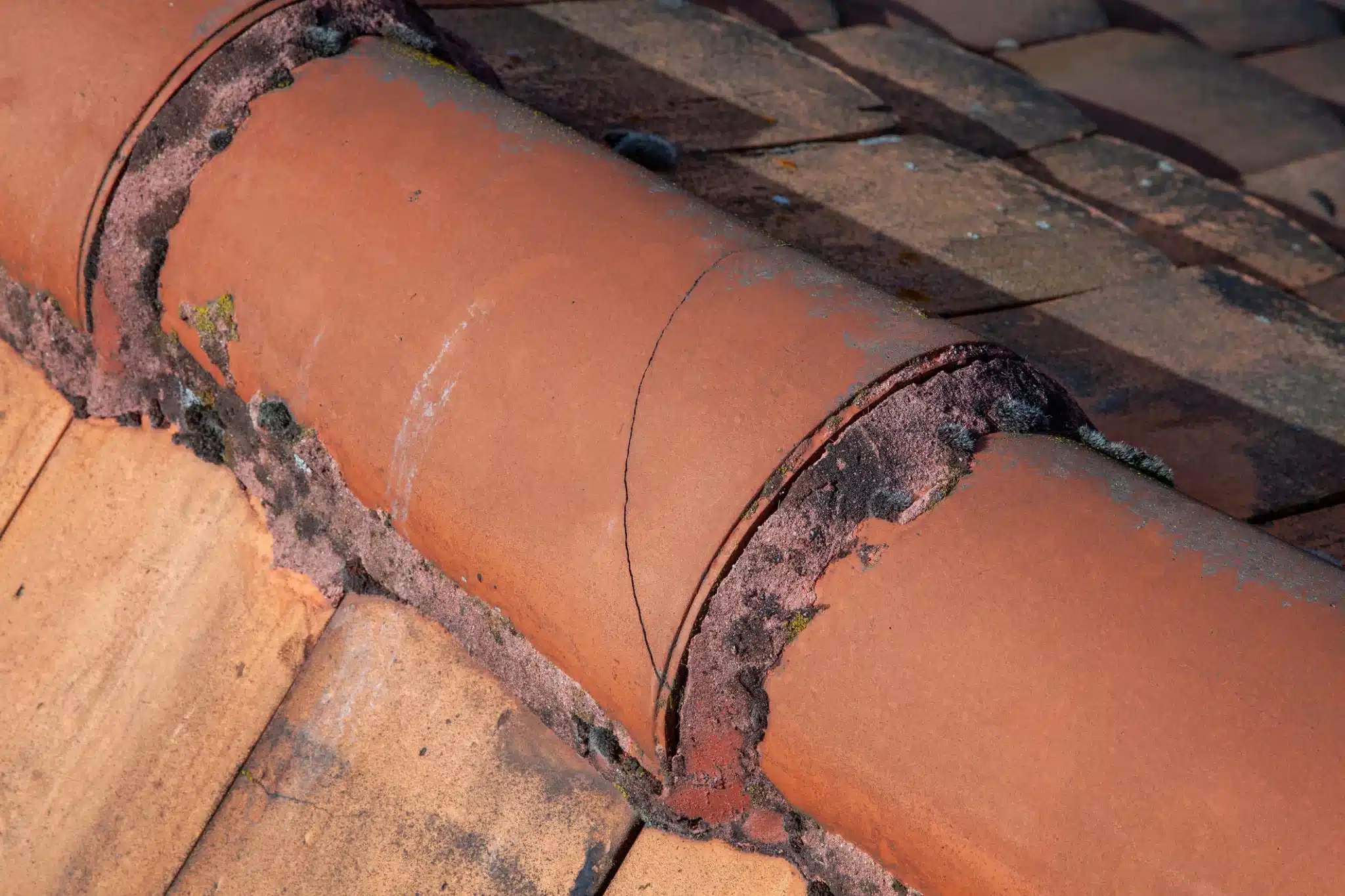
Not every cracked tile needs full replacement. The decision depends on the crack’s type, severity, and location.
| Crack Type | Description | Can It Be Sealed? | Should It Be Replaced? |
|---|---|---|---|
| Hairline surface crack | Fine line visible on the tile surface, tile still intact and firm | Yes, with roof-grade sealant | Not usually, unless multiple hairline cracks indicate overall tile brittleness |
| Through crack (full depth) | Crack extends through the entire thickness of the tile | Temporary seal only | Yes, replacement is the permanent fix |
| Corner chip or break | Corner section of the tile is missing or broken off | Depends on size and location | Yes, if the chip exposes the underlap area to water entry |
| Structural fracture | Tile is cracked into two or more separate pieces | No | Yes, immediate replacement required |
| Multiple cracks on one tile | Several cracks across the same tile | No | Yes, the tile is failing structurally |
For individual tile replacements, the broken roof tile replacement guide covers the process in detail. For widespread cracking across many tiles, a broader roof restoration may be more cost-effective than replacing tiles one by one.
What Happens If You Ignore a Cracked Tile
A cracked tile that is left unrepaired follows a predictable damage cascade that gets more expensive at every stage.
Stage one: Water entry begins. Rain enters through the crack and runs down the underside of the tile onto the sarking (waterproof membrane) below. If the sarking is intact, it redirects the water to the gutter and you may not notice anything initially.
Stage two: Sarking failure. Over time, the constant water flow deteriorates the sarking at the point where the water concentrates. The sarking tears, and water begins dripping onto the timber battens and rafters below.
Stage three: Timber damage. Wet timber promotes mould growth and the early stages of timber decay. The battens holding the tiles begin to soften and weaken.
Stage four: Ceiling damage. Water that has travelled through the roof cavity eventually finds a gap and drips through the ceiling lining. This is when most homeowners first notice the problem, but by this point, the damage has been accumulating for months or years inside the roof space above.
Stage five: Structural compromise. Prolonged moisture exposure causes significant timber decay in rafters and battens. Weakened battens can no longer hold tiles securely, leading to further tile displacement and more water entry. At this stage, the repair involves not just tile replacement but timber repairs, sarking replacement, and potentially ceiling restoration.
The cost of repairing a single cracked tile early is a small fraction of the cost of repairing the structural damage that results from ignoring it. This is why regular roof inspections catch cracked tiles before the damage cascade begins.
The Cracked Tile Repair Process
When you call Roof Restoration Northern Suburbs for a cracked tile repair, the process follows a structured approach.
Assessment. The roofer inspects the damaged tile and surrounding tiles to determine the extent of the problem. A single cracked tile may be an isolated issue, or it may indicate broader weakness if multiple tiles in the area are also showing signs of stress. The area below the crack in the roof cavity is also checked for any water damage to sarking and timber.
Matching. If the tile needs replacing, a matching tile must be sourced. For common concrete tile profiles (the majority of Melbourne’s northern suburbs housing stock), matching tiles are usually readily available. For discontinued tile profiles or older terracotta, sourcing can take longer. Your roofer may carry common spare tiles or source them from demolition suppliers.
Removal. The cracked tile and the overlapping tiles above it are carefully lifted to allow the damaged tile to slide out without disturbing the surrounding tiles.
Underlayment check. With the tile removed, the sarking and batten condition underneath are inspected. If the sarking is torn or the batten is soft, these are repaired before the new tile goes in.
Installation. The new or repaired tile is positioned correctly, ensuring it overlaps the tiles below and sits under the tiles above in the correct waterproof pattern. The tile is secured and the surrounding tiles are repositioned and checked.
Verification. The repair is checked from inside the roof cavity (if accessible) to confirm no light or gaps are visible at the repair point. The gutter area below is checked for any debris from the repair process.
For widespread tile issues across the roof, combining tile repairs with repointing, valley replacement, and roof painting in a full roof restoration is more cost-effective than addressing each issue separately over time.
How to Prevent Tile Cracks
Prevention reduces the frequency and cost of tile repairs over the roof’s lifespan.
Keep trees trimmed back from the roof line. Overhanging branches drop debris, promote moss growth that retains moisture against tile surfaces, and risk direct impact damage during storms.
Restrict foot traffic on the roof. Every unnecessary visit to the roof is a risk of cracking tiles. Use a qualified roofer for any work that requires roof access, including antenna installation, solar panel servicing, and gutter cleaning.
Maintain the tile surface coating. Concrete tiles with a maintained paint or membrane coating resist moisture penetration, which slows the internal deterioration that makes tiles brittle. A roof restoration every 15 to 20 years keeps the coating intact.
Schedule regular roof inspections. An annual or biannual inspection catches cracked tiles before they cause water damage. The cost of an inspection is negligible compared to the cost of the structural damage a missed crack can cause.
Install gutter guards to reduce the need for frequent gutter cleaning visits that require walking on or near the roof edge.