Terracotta vs Concrete Roof Tiles: Which One Is on Your Roof, What Each One Needs, and How to Decide When It Is Time for Restoration
- Blog
- November 10, 2026
Quick Overview:
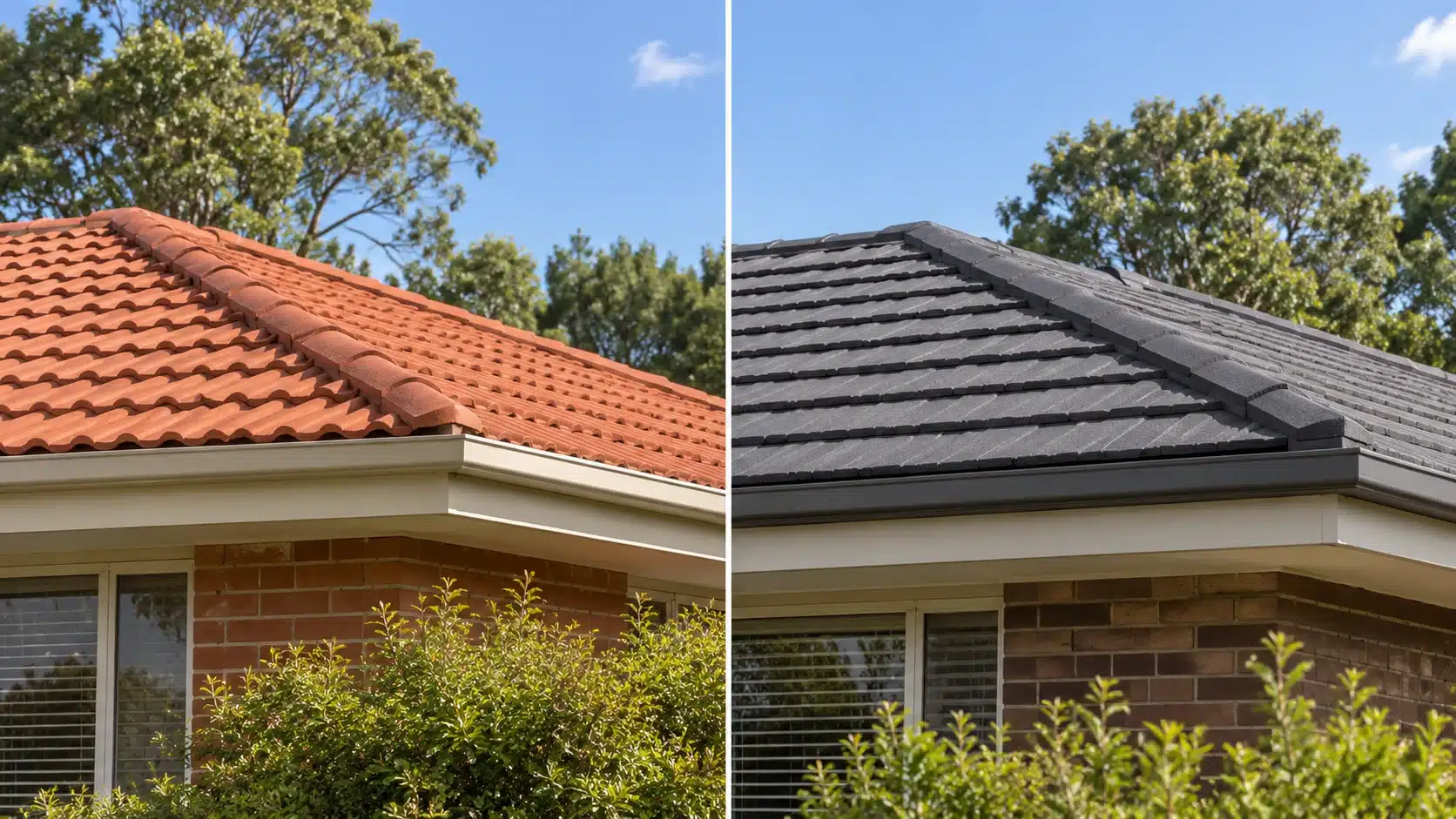
Terracotta vs concrete roof tiles is one of the most common questions Melbourne homeowners ask when their roof needs restoration, repairs, or replacement. Most homeowners know they have a tiled roof but are not sure which type they have or how the two materials differ in terms of lifespan, cost, maintenance, and long-term performance. The short answer is that terracotta tiles are fired natural clay, last longer (often 80 to 100 years), hold their colour because it is baked through the material, and require less frequent maintenance. Concrete tiles are a mix of sand, cement, and water with a surface coating, are less expensive upfront, last 40 to 60 years with proper maintenance, but require more regular attention because the coating breaks down under UV exposure and the tiles become porous once that coating wears off. Both tile types are widely used across Melbourne’s northern suburbs, and both can be restored, cleaned, repainted, and repointed to extend their service life. Which tile type suits your home depends on your budget, how long you plan to stay in the property, and what condition the existing roof is in. At Roof Restoration Northern Suburbs, we work on both concrete and terracotta tile roofs across Melbourne’s north and can assess which repair or restoration approach suits your roof.
How to Tell Which Tile Type Is on Your Roof
Before comparing the two materials, it helps to know which one you are looking at. Many homeowners assume they know, but concrete tiles from the 1970s and 1980s can look similar to terracotta from a distance, especially once they have weathered.
Terracotta tiles are made from natural clay fired at high temperatures. They have a warm, earthy colour (usually orange, red, or brown) that runs all the way through the tile. If you look at the underside or a broken edge, the colour is the same throughout. The surface has a slightly textured or semi-glazed finish. Terracotta tiles feel dense and heavy. They make a clear, ringing sound when tapped.
Table of Contents
ToggleConcrete tiles are a pressed mixture of sand, cement, and water with a factory-applied surface coating. The colour is only on the surface. If you look at the underside or a broken edge, you will see grey cement. Concrete tiles feel slightly lighter than terracotta and make a duller, flatter sound when tapped.
If your home was built before the 1960s, the tiles are almost certainly terracotta. If it was built from the 1970s onward, they are most likely concrete, as concrete tiles became the dominant material during that era. For a definitive answer, a roof assessment can confirm the tile type and its condition.
Lifespan and Durability
This is the most significant difference between the two materials and the one that matters most for long-term value.
Terracotta tiles are one of the longest-lasting roofing materials available. A well-maintained terracotta roof can last 80 to 100 years. The clay is fired at temperatures above 1000 degrees Celsius, which makes it extremely dense, hard, and resistant to weathering. Terracotta does not absorb water the way concrete does, and the colour does not fade because it is integral to the clay rather than sitting on the surface. The tiles themselves rarely fail. What fails is the bedding and pointing that holds the ridge caps in place, the valley flashing, and occasionally individual tiles that crack from impact or thermal movement.
Concrete tiles have a shorter but still substantial lifespan of 40 to 60 years with proper maintenance. The tiles themselves are structurally sound, but their weakness is the surface coating. The factory-applied colour coating breaks down under UV exposure over 10 to 15 years, leaving the raw cement exposed. Once the coating is gone, concrete tiles become porous, absorb water, and become a surface for moss and lichen growth. This does not mean the tiles have failed, but it does mean they need cleaning, resealing, and recoating to restore their waterproof barrier.
Cost Comparison
Upfront cost. Concrete tiles are significantly less expensive than terracotta tiles to purchase and install. This is the main reason concrete tiles became the dominant choice for new builds from the 1970s onward. The cost difference can be 30 to 50 per cent per square metre for the tiles alone.
Lifetime cost. This is where the comparison shifts. Terracotta tiles cost more upfront but require less maintenance over their lifespan and last considerably longer. A concrete tile roof will typically need two to three full restoration cycles (cleaning, repointing, recoating) over its life, each costing several thousand dollars. A terracotta roof will need repointing and occasional tile replacement but does not require the surface recoating that concrete demands. Over a 60-year period, the total cost of owning a terracotta roof can be comparable to or lower than concrete when maintenance is factored in.
Restoration cost. The cost of restoring a concrete tile roof is generally higher per cycle than terracotta because it includes cleaning, resealing, and applying new coatings on top of the standard repointing. Terracotta roof restoration focuses more on repointing, replacing cracked tiles, and cleaning, with painting being optional rather than necessary.
Maintenance Requirements
Maintenance is where the day-to-day difference between the two materials shows up most clearly for homeowners.
Concrete tile maintenance is more demanding because of the surface coating. Once the coating wears through (typically after 10 to 15 years), the tiles need professional cleaning to remove moss, lichen, and dirt buildup, followed by resealing and recoating. The ridge cap bedding and pointing also needs attention every 10 to 15 years. Between restoration cycles, homeowners should clear gutters twice yearly and visually check for cracked or shifted tiles after storms. Our tile roof maintenance guide covers the full schedule for both tile types.
Terracotta tile maintenance is less frequent. The tiles themselves resist weathering, do not need recoating, and hold their colour without intervention. Maintenance focuses on repointing ridge caps (which use the same mortar bedding as concrete roofs and deteriorate at a similar rate), checking and replacing individual cracked tiles, clearing valleys of debris, and gutter cleaning. Terracotta is not maintenance-free, but the scope of work at each service interval is narrower.
Weight and Structural Considerations
Terracotta tiles are heavier than concrete tiles per square metre. This matters in two situations: when replacing one tile type with another, and when assessing whether the roof structure can support additional loads like solar panels.
A typical concrete tile weighs around 4 to 5 kilograms per tile. A terracotta tile of the same profile weighs 3.5 to 4.5 kilograms, though some profiles are heavier. The difference per tile is small, but over an entire roof it adds up. Most homes built with terracotta tiles were framed to carry the weight, so the existing structure is not a concern unless it has been modified. Switching from concrete to terracotta (or vice versa) on an existing home may require a structural assessment to confirm the framing can handle the change in load.
Appearance and Ageing
How the two tile types age is one of the most visible differences and one that affects both street appeal and property value.
Terracotta tiles age gracefully. Because the colour is fired into the clay, the tiles develop a weathered patina over the decades but do not fade, peel, or lose their surface the way concrete does. A 40-year-old terracotta roof can still look characterful and attractive. Some homeowners choose to paint terracotta tiles for a colour change, but it is not a structural necessity.
Concrete tiles do not age as well visually. The surface coating fades within 10 to 15 years under Melbourne’s UV conditions, turning the tiles chalky and washed out. As porosity increases, dark staining from moss and lichen develops, often unevenly. A 20-year-old concrete roof that has not been restored can look significantly older than its age. This is why concrete tile roofs benefit from periodic roof painting as part of the restoration cycle.
Climate Performance in Melbourne
Melbourne’s climate is hard on roofs. The combination of high UV exposure in summer, cold wet winters, temperature swings between seasons, and occasional hailstorms tests both tile types differently.
UV resistance. Terracotta is naturally UV stable. The clay does not break down under sun exposure. Concrete’s surface coating degrades under UV, which is the primary driver of its shorter maintenance cycle.
Thermal movement. Both tile types expand and contract with temperature changes. Terracotta handles this slightly better due to its density and fired composition. Concrete tiles can develop hairline cracks over decades of thermal cycling, particularly in exposed positions.
Moisture and frost. Terracotta’s low porosity means it absorbs very little water, making it more resistant to the freeze-thaw cycles that can affect roofs in Melbourne’s cooler months. Concrete tiles, once their coating has worn, absorb moisture that can contribute to deterioration during cold snaps.
Hail. Both tile types can crack or chip under hail impact. Neither material is hail-proof. Terracotta’s greater density makes it slightly more resistant to small hail, but large hailstones will damage both. After a significant hailstorm, a roof tile inspection and repair should be carried out regardless of tile type.
Restoration vs Replacement: When Each Tile Type Reaches the End
Understanding when each tile type transitions from restorable to replaceable helps homeowners plan ahead.
Concrete tiles are typically restored (cleaned, repointed, recoated) two to three times over their life. Once the tiles themselves begin to deteriorate structurally (crumbling edges, widespread cracking, tiles that break when walked on), restoration is no longer cost-effective and replacement is the better investment. This usually occurs around the 40 to 60 year mark.
Terracotta tiles can often be maintained through repointing and individual tile replacement for much longer. Full replacement is usually driven by one of two things: widespread cracking from age or impact damage that makes sourcing matching replacement tiles impractical, or a decision to change the roof material entirely as part of a major renovation. Many terracotta roofs in Melbourne’s inner and middle suburbs are still performing well at 60 to 80 years old. Understanding how long each roof type lasts helps with planning and budgeting.
How to Decide What Your Roof Needs
If you already have a tiled roof, the tile type is already decided. The real question is what condition it is in and what work it needs now to prevent more expensive problems later. Both concrete and terracotta tile roofs benefit from periodic professional assessment and maintenance.
If your concrete tile roof has faded coatings, moss growth, crumbling pointing, or cracked tiles, a full roof restoration can reset the clock and protect the roof for another 10 to 15 years.
If your terracotta tile roof has failing ridge cap mortar, damaged or missing tiles, or debris-filled valleys, targeted repairs and repointing can address the specific issues without the broader scope of work a concrete roof demands.
Contact us for a free roof assessment across Melbourne’s northern suburbs.
Terracotta vs Concrete Roof Tiles
How the two most common tile types in Melbourne compare across lifespan, cost, maintenance, appearance, and climate performance.
Head-to-Head Comparison
Concrete Tiles
Sand, cement, and water with a surface coating
Lifespan: 40 to 60 years with maintenance
Colour on the surface only. Fades in 10 to 15 years
Becomes porous once coating wears off
Needs cleaning, resealing, and recoating regularly
Lower upfront cost (30 to 50% cheaper)
MOST COMMON SINCE 1970s
Terracotta Tiles
Natural clay fired at over 1000 degrees Celsius
Lifespan: 80 to 100 years with maintenance
Colour baked through the entire tile. Does not fade
Dense and naturally water-resistant
Maintenance focuses on repointing and tile replacement
Higher upfront cost but lower lifetime maintenance
LONGEST LASTING TILE TYPE
How to Identify Your Tile Type
Check the Underside
Terracotta is the same clay colour all the way through. Concrete shows grey cement under the surface coating.
Tap Test
Terracotta makes a clear ringing sound. Concrete produces a flatter, duller sound when tapped.
Age of Home
Pre-1960s homes almost always have terracotta. 1970s onward most commonly have concrete tiles.
Surface Appearance
Chalky, faded, or patchy surface means concrete with worn coating. Consistent earthy colour means terracotta.
What Each Tile Type Needs
🧱 Concrete Tile Maintenance
EVERY 6 MONTHS
Visual check. Gutter clearing. Check for cracked or shifted tiles after storms.
ANNUALLY
Professional on-roof inspection. Check bedding, flashing, and coating condition.
EVERY 10 TO 15 YEARS
Full restoration: cleaning, repointing, resealing, and recoating the entire roof.
MORE FREQUENT, BROADER SCOPE
🏛️ Terracotta Tile Maintenance
EVERY 6 MONTHS
Visual check. Gutter clearing. Check for cracked tiles after storms.
ANNUALLY
Professional inspection. Check ridge cap mortar, valleys, and individual tiles.
EVERY 10 TO 15 YEARS
Repointing ridge caps and replacing damaged tiles. No recoating required.
LESS FREQUENT, NARROWER SCOPE
Melbourne Climate Performance
UV Resistance
Terracotta: naturally UV stable. Concrete: coating degrades under UV within 10 to 15 years.
TERRACOTTA WINS
Thermal Movement
Both expand and contract. Terracotta handles it slightly better. Concrete can develop hairline cracks.
TERRACOTTA EDGE
Moisture Resistance
Terracotta: low porosity, absorbs very little water. Concrete: porous once coating wears off.
TERRACOTTA WINS
Hail Resistance
Both crack under hail impact. Terracotta slightly more resistant to small hail. Large hail damages both.
SIMILAR
💡 The Key Takeaway
Terracotta tiles last longer, hold their colour, resist UV and moisture better, and require less frequent maintenance. Concrete tiles cost less upfront but need regular cleaning, resealing, and recoating to stay weatherproof. Both tile types are common across Melbourne's northern suburbs and both can be restored to extend their service life. The right approach depends on what condition your tiles are in now and what work they need to stay performing.
roofrestorationnorthernsuburbs.com.au | Roof Restoration Northern Suburbs | Melbourne's Northern Suburbs
Frequently Asked Questions
Q1. What is the main difference between terracotta and concrete roof tiles?
The main difference is the material and how each tile holds its colour. Terracotta tiles are natural clay fired at high temperatures, with colour baked all the way through the material. Concrete tiles are a pressed mix of sand, cement, and water with a surface coating that provides the colour. This coating breaks down under UV exposure over 10 to 15 years, leaving the concrete porous and exposed. Terracotta does not have this issue, which is why it requires less frequent maintenance.
Q2. Which roof tile lasts longer, terracotta or concrete?
Terracotta tiles last significantly longer. A well-maintained terracotta roof can last 80 to 100 years. Concrete tiles typically last 40 to 60 years with regular maintenance, including periodic cleaning, resealing, and recoating. Both tile types require repointing of ridge caps at similar intervals, but concrete tiles need additional surface work that terracotta does not.
Q3. Are concrete roof tiles cheaper than terracotta?
Yes, concrete tiles are less expensive to purchase and install, typically 30 to 50 per cent cheaper per square metre for the tiles alone. However, concrete tiles require more frequent and more extensive maintenance over their lifespan, including cleaning, resealing, and recoating every 10 to 15 years. Over a 60-year period, the total cost of ownership can be similar once maintenance is factored in.
Q4. Can you paint terracotta roof tiles?
Yes. Terracotta tiles can be painted to change the colour or refresh the appearance, but unlike concrete tiles, painting terracotta is a cosmetic choice rather than a maintenance necessity. Terracotta holds its original colour indefinitely because the colour is fired into the clay. If you do choose to paint terracotta, specialist breathable coatings are required to allow moisture to escape from the tile.
Q5. How do I know if my roof tiles are concrete or terracotta?
Look at the underside or broken edge of a tile. Terracotta is the same warm clay colour all the way through. Concrete shows grey cement underneath the surface coating. Terracotta tiles also make a clear ringing sound when tapped, while concrete tiles produce a flatter, duller sound. Homes built before the 1960s almost always have terracotta. Homes built from the 1970s onward most commonly have concrete. If you are unsure, a professional roof assessment can confirm the tile type and its condition.
Do not wait for a small problem to become a big one. If you have spotted broken, cracked, or missing tiles on your Melbourne northern suburbs home, the team at Roof Restoration Northern Suburbs is ready to help. Get in touch today for a no-obligation inspection and quote.
Contact us today for a free, no‑obligation roof assessment and quote.
If you want a thorough and safe roof cleaning, don’t hesitate to reach out to us for expert services. We can handle everything from roof cleaning to roof restoration.
- 0489 088 778
- info@roofrestorationnorthernsuburbs.com.au
- 32 Milleara Road Keilor East VIC 3033
- Mon-Sat : 8AM – 5PM