Cause 1: Cracked or Failed Ridge Capping Mortar
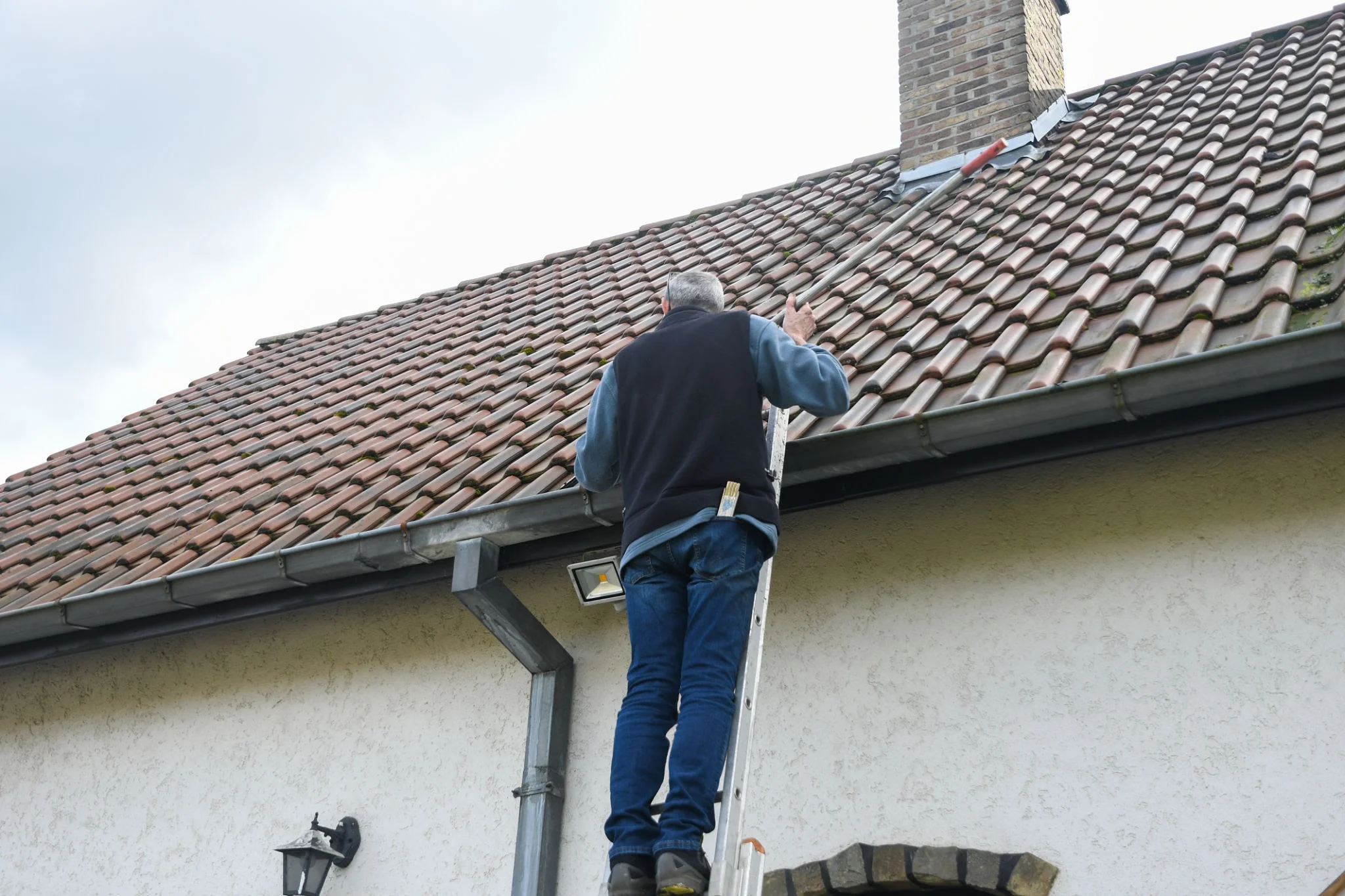
This is the number one cause of roof leaks across Melbourne’s northern suburbs, and it is the one most homeowners never think to check because ridge capping sits at the very peak of the roof where it is difficult to see from ground level.
Ridge caps are the shaped tiles or metal caps that sit along the peak of your roof where two roof planes meet. They are held in place with mortar (bedding) and sealed with a flexible pointing compound. Over time, this mortar cracks, shrinks, and eventually falls away due to thermal cycling (expanding in heat, contracting in cold), ground movement, and general age.
Once the mortar fails, rainwater enters directly into the roof cavity through the gaps. During light rain, the water may spread across the sarking and evaporate before you notice anything. During heavy or prolonged rain, the volume overwhelms the sarking and drips through onto your ceiling.
The fix is professional roof repointing and rebedding, where all ridge caps are re-bedded with fresh flexible mortar and repointed with a flexible compound that moves with the roof rather than cracking.
“About half the roof leaks we investigate in Melbourne’s northern suburbs come back to failed ridge capping. The homeowner has been patching ceiling stains for years without realising the water is entering at the very top of the roof and running down the inside before dripping through.”
Cause 2: Corroded or Damaged Valley Irons
Valleys are the V-shaped channels where two roof planes meet at an internal angle. They channel large volumes of water down to the gutters during rain, making them one of the hardest-working parts of the roof.
Most valleys on Melbourne homes are made from galvanised steel or zinc. Over decades, the protective coating wears away and the metal underneath begins to rust. Rust pits develop into pinholes, and pinholes become full perforations. Once the valley iron is perforated, every rainfall sends water directly into the roof cavity.
Additional problems occur when debris (leaves, twigs, dirt) accumulates in the valley channel, creating a dam that forces water sideways underneath the surrounding tiles.
The fix is professional roof valley replacement with new Colorbond or galvanised steel valley irons. Patching corroded valleys with sealant is a temporary measure at best. Once rust has compromised the metal, replacement is the only permanent solution.
Cause 3: Lifted, Cracked, or Missing Flashing
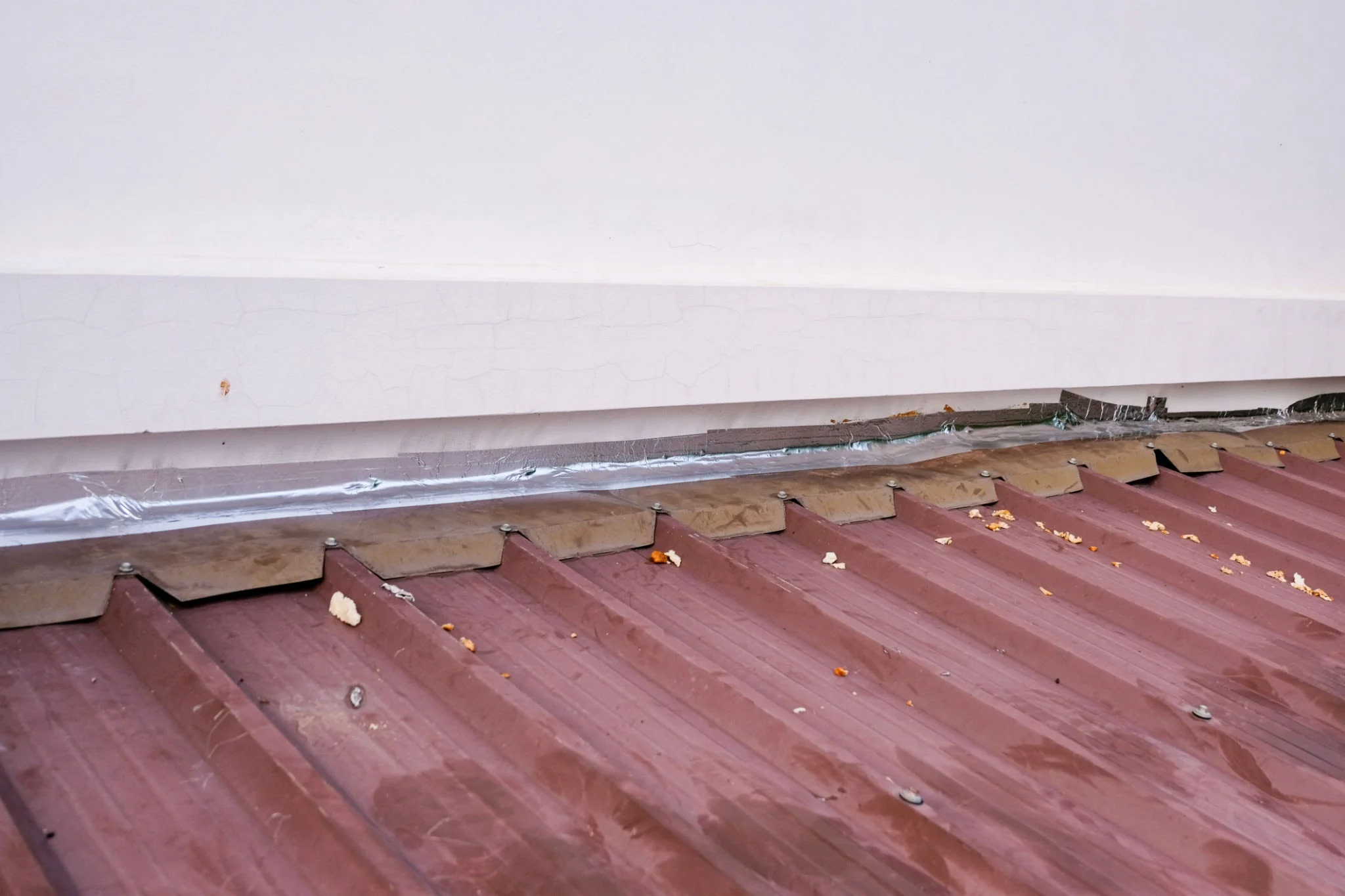
Flashing is the thin metal strip that seals the junction between the roof and any vertical surface: walls, chimneys, vent pipes, skylights, and parapet walls. It prevents water from entering at these vulnerable transition points.
Flashing fails when it lifts away from the wall due to thermal movement, when the sealant securing it deteriorates, when the metal itself corrodes, or when it was poorly installed in the first place. A gap of just one or two millimetres between the flashing and the wall is enough to allow wind-driven rain underneath.
| Flashing Location | Common Failure | What You Might See Inside |
|---|---|---|
| Wall-to-roof junction | Sealant failure, lifting from wall | Water stains on the wall directly below the roofline |
| Chimney | Cracked lead or corroded metal | Stains on the ceiling or wall around the fireplace |
| Vent pipes | Rubber boot cracking from UV | Stains near the bathroom or kitchen |
| Skylights | Frame seal failure, aged gaskets | Water pooling or dripping around the skylight frame |
The fix is professional roof flashing repair or replacement, including resealing all junctions with appropriate flashing sealant.
Cause 4: Cracked, Displaced, or Broken Tiles
Individual tiles can crack from foot traffic (someone walking on the roof incorrectly), falling branches, hail damage, or simply age-related brittleness from decades of UV exposure. When a tile cracks, the gap may be invisible from the ground but large enough to allow water through during rain.
Tiles can also shift out of their correct position due to wind, ground movement, or previous poor maintenance. A displaced tile breaks the overlapping waterproof pattern, creating a gap that channels water directly into the roof cavity.
For tile-specific damage, the roof tile repairs Melbourne service covers individual tile replacement, repositioning, and securing. For more widespread tile issues, a broader roof restoration may be the more cost-effective solution. To understand whether your tiles can handle foot traffic without damage, read can you walk on roof tiles.
Cause 5: Blocked Gutters Causing Overflow
When gutters are blocked with leaves, debris, or dirt, rainwater cannot drain away properly. Instead, it backs up and overflows, running behind the fascia board and into the roof cavity or down the inside of the walls.
This type of leak is deceptive because the roof itself may be perfectly sound. The water entry point is at the gutter line, not on the roof surface. Homeowners often assume the roof has failed when the real problem is a gutter that has not been cleaned in months.
Regular gutter cleaning prevents this entirely. For homes surrounded by trees, gutter guard installation reduces debris buildup significantly. If gutters are sagging, corroded, or damaged beyond cleaning, gutter replacement is the permanent solution.
Cause 6: Failed Roof Sealing Around Penetrations
Every hole cut through a roof for a vent pipe, exhaust fan, antenna mount, evaporative cooler, solar panel frame, or skylight is a potential leak point. These penetrations are sealed with rubber boots, silicone sealant, or flashing at the time of installation, but every one of these materials degrades over time.
Rubber boots crack and split from UV exposure. Silicone sealant dries out and shrinks. Metal flashing around skylights and coolers corrodes at the edges. Once the seal fails, rain enters through the gap around the penetration.
The fix involves resealing or replacing the waterproofing around each penetration. This is typically checked as part of a professional roof inspection and addressed during a roof restoration or as a standalone repair.
Why the Leak Is Not Where You Think It Is
One of the most important things to understand about roof leaks is that water rarely drips straight down from the entry point. Water follows the path of least resistance along the underside of roof components.
It enters through a gap in the ridge capping and runs along a rafter for two metres before dripping onto the ceiling. It enters through a valley and spreads across the sarking before pooling at a low point three metres from the valley. It enters around a vent pipe and trickles down the inside of the pipe casing before appearing on the ceiling near a light fitting.
This is why patching the ceiling stain without finding the actual entry point on the roof is pointless. The stain will return at the next heavy rain because the source was never addressed. Professional leak detection traces the water path from inside the roof cavity and externally to pinpoint the exact entry point before any repair work begins.
What to Do When Your Roof Leaks During Rain
If your roof is actively leaking right now, these are the immediate steps.
Contain the water inside by placing buckets and towels under drip points. Move furniture and electronics away from the affected area. Turn off electricity to the area if water is near light fittings or power points. Do not climb onto a wet roof.
Once the rain stops and the roof is dry, arrange a professional roof inspection to identify and fix the actual cause. For emergency situations, emergency roof repairs are available. For a step-by-step guide on managing the situation safely, read how to stop a roof leak temporarily.
If storm damage caused the leak, document the damage with photos before any repairs and review the roof damage insurance claims guide.