Step 1: Contain the Damage Inside First
Before you even think about the roof, manage what is happening inside the house. Water running down walls, dripping from ceilings, and pooling on floors causes electrical hazards, structural damage, and mould growth.
Place buckets, containers, or towels directly under every drip point. If water is pooling on the ceiling and creating a visible bulge, place a bucket underneath and carefully puncture the centre of the bulge with a screwdriver to release the water in a controlled way. This sounds counterintuitive, but a controlled release prevents the weight of pooled water from collapsing the entire ceiling section.
Move furniture, electronics, and valuables away from the affected area. Water damage to floors, carpets, and belongings adds significantly to the overall cost of the incident.
Turn off electricity to the affected area if water is near light fittings, power points, or electrical wiring. Water and electricity are a deadly combination. If you are unsure which circuit controls the affected area, turn off the main switch and call an electrician.
Do not ignore a small drip. What appears as a minor leak at the ceiling is often a much larger volume of water spreading across the roof cavity above. The drip you can see is just where the water finally finds a way through. The actual damage area is usually much wider.
Step 2: Identify Where the Water Is Coming In
If you can safely access your roof cavity through a manhole, this is the best way to trace the leak from inside without climbing onto the roof.
From inside the roof cavity: Use a torch and look for wet timber, water trails on rafters, light coming through gaps, or damp insulation. Water often travels along rafters and battens before dripping down, so the entry point on the roof may be several metres away from where the drip appears on the ceiling below.
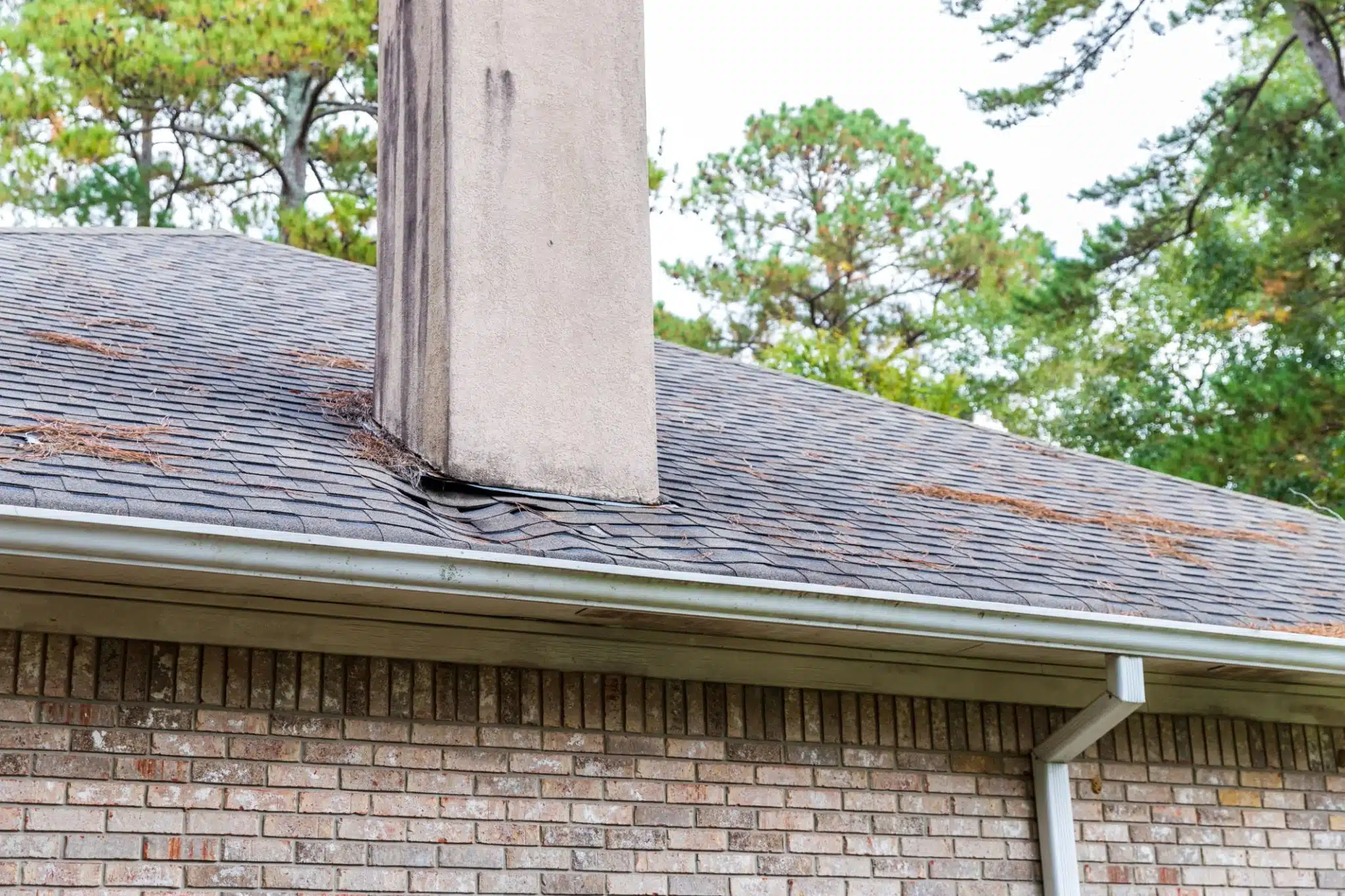
From the ground outside: Look up at the roof for obvious signs: displaced tiles, cracked ridge caps, missing mortar, visible rust on valleys, or flashing that has lifted away from the wall. Use binoculars if needed. Do not climb onto a wet roof.
For a more detailed guide on tracing leak sources, read how to find a roof leak.
“The drip on your ceiling is rarely directly below the actual roof entry point. Water travels along the underside of battens and rafters, sometimes moving two or three metres sideways before it finds a gap to drip through. That is why professional leak detection matters. Patching the wrong spot is the most common DIY mistake.”
Step 3: Apply a Temporary Fix
Once you know approximately where the water is entering, you can apply a temporary fix. Choose the method that matches your situation and comfort level.
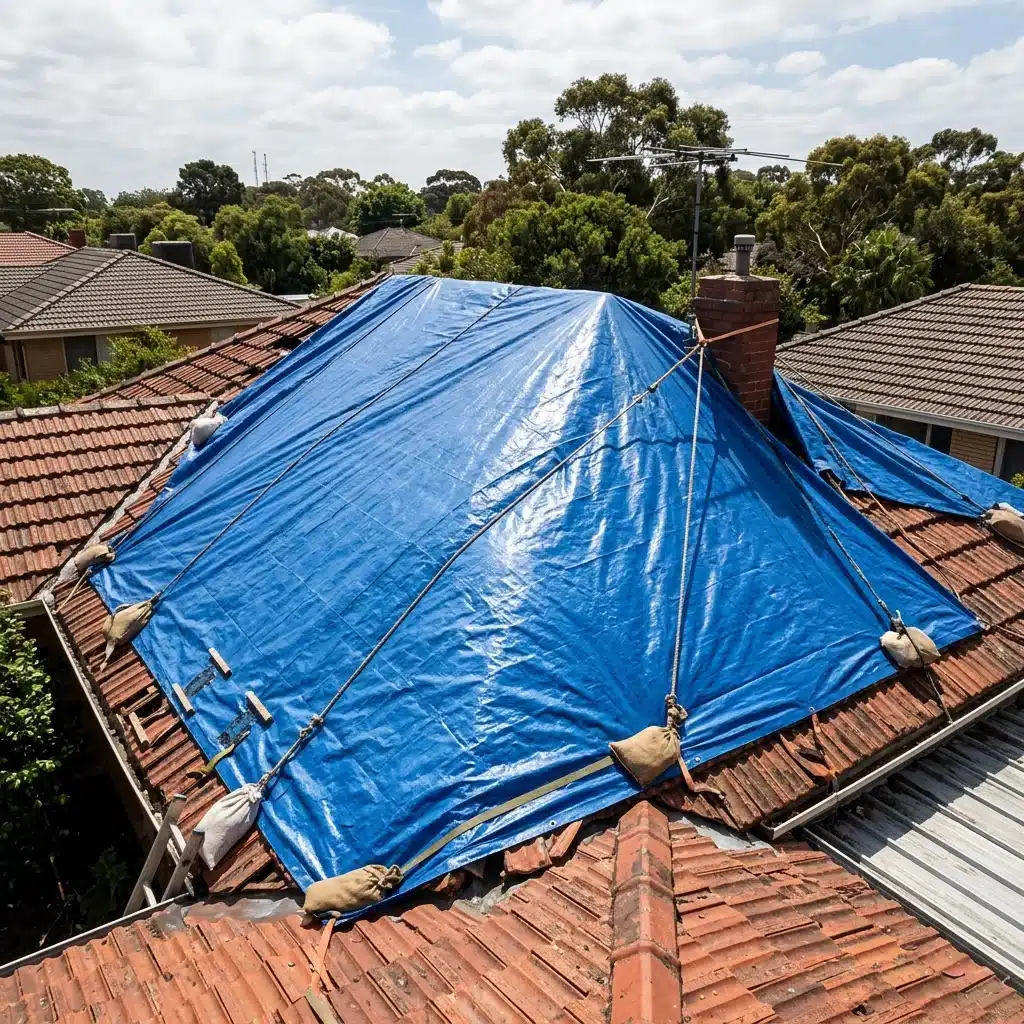
Method 1: Tarp over the roof (most effective external fix)
This is the most reliable temporary fix for larger leak areas or when you cannot pinpoint the exact entry point.
What you need: A heavy-duty tarp (at least 2m x 3m), rope or bungee cords, and something heavy to weigh down the edges (sandbags, bricks, or timber).
How to apply: Drape the tarp over the affected area, extending it at least one metre past the suspected leak point in every direction. Secure the edges with weights or tie the tarp down to prevent wind from lifting it. The tarp should extend over the ridge line if possible so water cannot run underneath from above.
Safety warning: Only do this if the roof is dry, accessible from a ladder, and the pitch is manageable. Never climb onto a wet roof. If conditions are unsafe, wait for the rain to stop or call an emergency roof repair service.
Method 2: Roofing sealant from inside the roof cavity
If you can access the roof cavity and identify where water is entering through a crack or gap, applying a waterproof roofing sealant (available from any hardware store) directly to the entry point from underneath can slow or stop the flow temporarily.
What you need: A tube of roof and gutter silicone sealant and a caulking gun.
How to apply: Dry the area as much as possible with a rag, then apply a generous bead of sealant over the crack or gap. Press it firmly into the opening. Allow it to cure for at least 24 hours before it is fully effective.
Method 3: Waterproof tape on visible cracks
For small, visible cracks on accessible tiles or flashing, heavy-duty waterproof repair tape (butyl rubber tape) provides a quick temporary seal.
What you need: A roll of waterproof roof repair tape (not standard duct tape, which does not seal against water pressure).
How to apply: Clean the surface, dry it as much as possible, cut a piece of tape large enough to cover the crack with at least 50mm overlap on all sides, and press firmly to ensure full adhesion.
Method 4: Replace a broken tile temporarily
If you can see a clearly broken or displaced tile from the ground and have a spare matching tile, sliding the broken tile out and replacing it is a straightforward fix on a dry roof. If you do not have a spare tile, sliding a piece of sheet metal or a plastic sheet underneath the broken tile can redirect water away from the gap temporarily.
What NOT to Do During a Roof Leak Emergency
Avoid these common mistakes that homeowners make in the moment.
| Mistake | Why It Makes Things Worse |
|---|---|
| Climbing onto a wet roof | Extremely dangerous. Wet tiles and metal roofing are slippery. Falls cause serious injury and death. |
| Using regular duct tape | Standard duct tape is not waterproof under pressure. It peels off within hours when wet. |
| Ignoring the leak because it stopped raining | The damage is already done. Wet timber, insulation, and ceiling materials continue deteriorating even after the rain stops. |
| Applying cement or mortar as a quick fix | Rigid materials crack with thermal movement. They also add weight and can damage tiles further. |
| Leaving a tarp for months | A tarp is a temporary fix for days, not a permanent solution. UV degrades tarps quickly, and trapped moisture underneath accelerates rot. |
| Painting over a ceiling stain without fixing the roof | Cosmetic only. The next rain brings the stain back, and the hidden damage behind it continues spreading. |
After the Emergency: What Happens Next
Once the immediate leak is contained, these are the steps to move from temporary fix to permanent repair.
Book a professional roof inspection. A qualified roofer inspects the roof externally and from inside the cavity to identify every entry point, not just the one you found. Leaks often have multiple contributing factors: cracked tiles, failed flashing, deteriorated valley irons, and crumbling ridge capping mortar can all contribute to the same leak.
Assess the extent of internal damage. Check the roof cavity for wet or damaged insulation, mould growth on timber, and moisture spread. If the leak has been ongoing, there may be hidden damage that needs addressing before any internal repairs (plastering, painting) are done.
Get a permanent repair or restoration quote. Depending on the scope of damage, the solution may be a targeted repair (replacing a few tiles and reflashing) or a broader roof restoration if the leak was a symptom of overall roof deterioration. Understanding how roof leaks affect your home helps you appreciate why permanent fixes matter.
Check your insurance. Storm damage to roofs is typically covered under home and contents insurance. Document the damage with photos before any repairs are made, and contact your insurer early. The roof damage insurance claims guide covers what is and is not claimable.