Why Reservoir Roofs Need Restoration Now
Reservoir holds one of the densest concentrations of mid-century housing in Melbourne’s north. The suburb experienced its biggest building boom between the 1950s and 1980s, which means the majority of roofs in the area are now 40 to 70 years old.
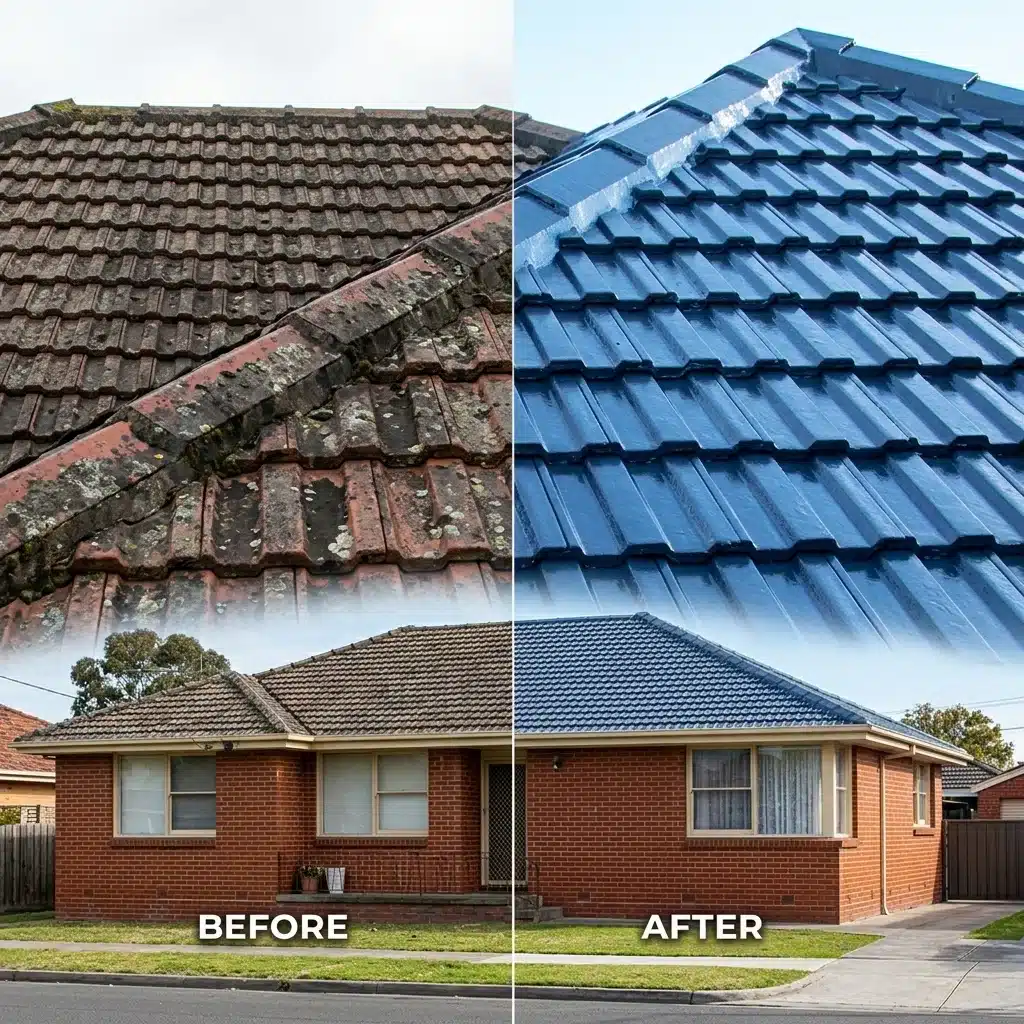
Post-war homes (1950s to 1960s). These are Reservoir’s oldest properties. Many still have their original terracotta or early concrete tile roofs. The tiles are often still structurally functional, but decades of Melbourne’s UV, rain, and temperature cycling have left the surfaces extremely weathered. Ridge capping mortar on these roofs is almost always failed and in need of complete repointing and rebedding.
1970s to 1980s brick veneer. This is Reservoir’s most common house type. Concrete tile roofs from this era are now 40 to 50 years old: old enough to look terrible but young enough to have decades of structural life remaining. These are the ideal candidates for restoration rather than replacement.
1990s to 2000s homes. Newer homes scattered through Reservoir’s infill developments generally have roofs in reasonable condition but benefit from preventative roof cleaning and gutter maintenance to extend their lifespan.
“Reservoir is one of those suburbs where you can drive down a street and see the same roof problem on every second house. The homes were all built around the same time, so the roofs all hit the same stage of wear together. Once one gets restored, the neighbours see the transformation and follow.”
Common Roof Problems Across Reservoir
| Problem | What It Looks Like | What Happens If Ignored |
|---|---|---|
| Failed ridge capping mortar | Crumbling, cracked, or missing mortar along roof peaks | Water enters the roof cavity, causing ceiling stains, mould, and timber rot |
| Faded and chalking surface | Washed-out colour, white powder when touched | Reduced UV protection, accelerated tile degradation |
| Corroded valley irons | Rust stains visible on the roof, holes in valley metal | Leaks during heavy rain, water damage to internal walls and ceilings |
| Cracked or broken tiles | Visible cracks, missing corners, shifted tiles | Direct water entry, increased damage during storms |
| Moss and lichen growth | Green or dark patches on shaded roof sections | Moisture retention under tiles, surface breakdown, blocked drainage paths |
| Blocked or sagging gutters | Overflowing during rain, visible debris and leaf buildup | Foundation moisture, fascia rot, garden bed erosion |
Reservoir’s mature tree canopy, particularly along streets near Edwardes Lake and the surrounding parklands, contributes to heavy leaf fall and moss growth on shaded roof sections. This is a suburb-specific factor that accelerates roof deterioration compared to newer, more exposed suburbs further north.
If you are noticing two or more of these issues, a professional roof inspection confirms exactly what needs attention. For a deeper guide to what to watch for, read signs of roof damage Melbourne.
What a Roof Restoration in Reservoir Includes
The process follows the same professional sequence used across all RRNS projects.
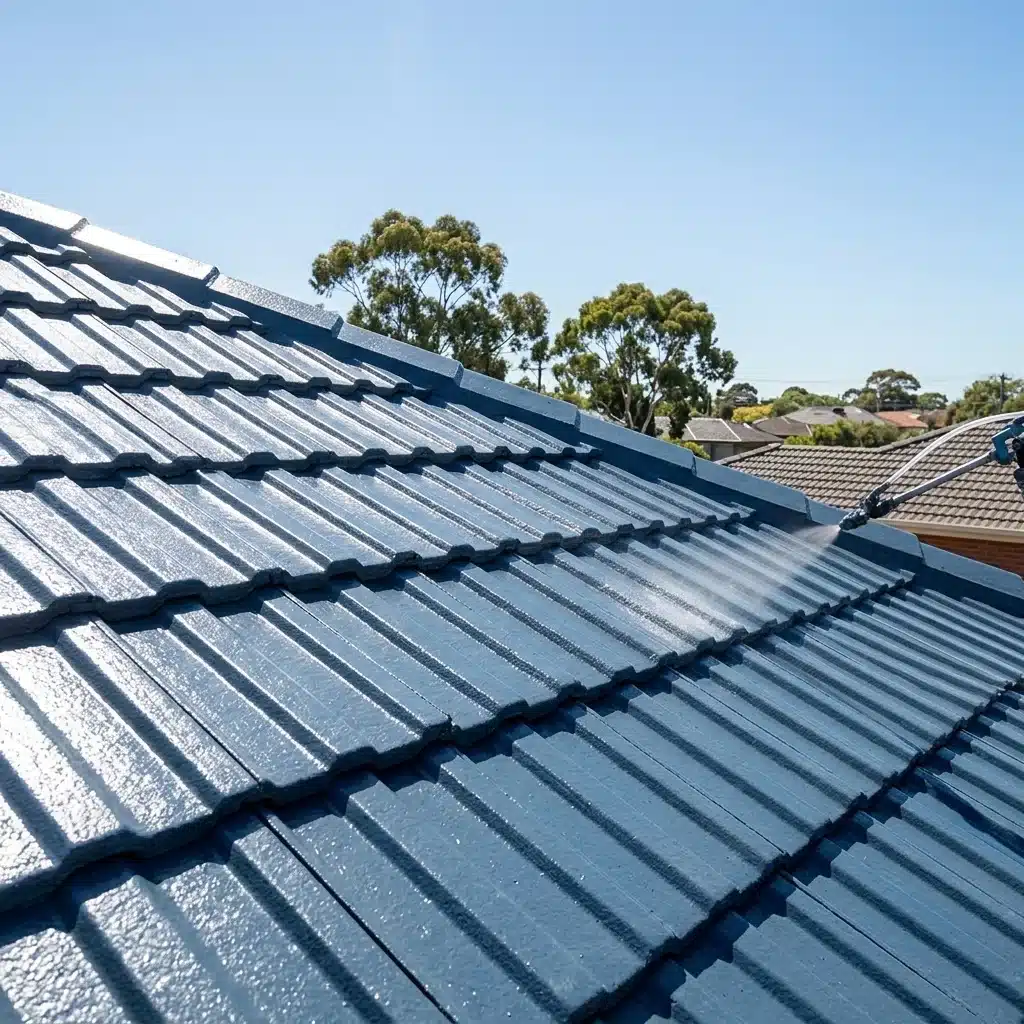
High-pressure cleaning. The entire roof surface is pressure washed to strip decades of dirt, moss, lichen, and atmospheric grime back to a clean substrate. This step alone transforms the visual appearance of the roof. Learn more about roof cleaning in Melbourne.
Repairs. Cracked or broken tiles are replaced. Damaged flashing is repaired or renewed. Corroded valleys are replaced with new galvanised or Colorbond valley irons.
Repointing and rebedding. All ridge caps are re-bedded with flexible mortar and repointed with a flexible pointing compound. On Reservoir’s older homes, this is frequently the most critical repair because failed ridge capping is the primary entry point for water.
Priming. A dedicated sealer coat is applied to the cleaned and repaired surface. On Reservoir’s porous concrete tiles, this step is essential for blocking moisture absorption and ensuring topcoat adhesion.
Painting. Two full coats of a professional-grade roof membrane are applied, delivering UV protection, waterproofing, and a fresh colour that completely transforms the home’s street presence. For colour options, read the best colour for roof paint guide.
Reservoir’s Unique Considerations
Mature tree canopy. Reservoir has significant mature tree coverage, especially around Edwardes Lake Park, Reservoir Leisure Centre, and the older residential pockets. This means heavier leaf fall into gutters, more shading that promotes moss growth, and greater risk of branch damage during storms. Gutter guard installation is worth considering alongside a restoration for homes surrounded by trees.
Heritage and character overlays. Some pockets of Reservoir fall within heritage or neighbourhood character overlays. If your property is in one of these zones, check with Darebin City Council before changing roof colour or material. A professional roof inspection can advise on what is and is not permissible.
Multi-unit properties. Reservoir has a growing number of dual-occupancy and multi-unit developments. Shared roofs on these properties require coordination between owners. RRNS handles multi-unit restorations across the northern suburbs.
Cost and Timing
Restoration costs in Reservoir are consistent with broader Melbourne northern suburbs pricing and depend on roof size, pitch, material, accessibility, and the extent of repairs needed. For detailed cost breakdowns, the roof restoration cost Melbourne and roof painting cost guides cover every variable. For homeowners comparing restoration against full replacement, the roof replacement cost Melbourne guide explains why restoration is usually the smarter option for structurally sound roofs.
The best time to book is autumn (March to May) or spring (September to November) when Melbourne’s moderate temperatures provide ideal curing conditions. Read how to prepare your roof for winter for seasonal planning advice.
Reservoir and Surrounding Suburbs We Service
Roof Restoration Northern Suburbs services Reservoir and all neighbouring suburbs including Preston, Coburg, Thornbury, Northcote, Kingsbury, Bundoora, Epping, Thomastown, and Lalor. For the full suburb-by-suburb overview, read our northern suburbs guide.