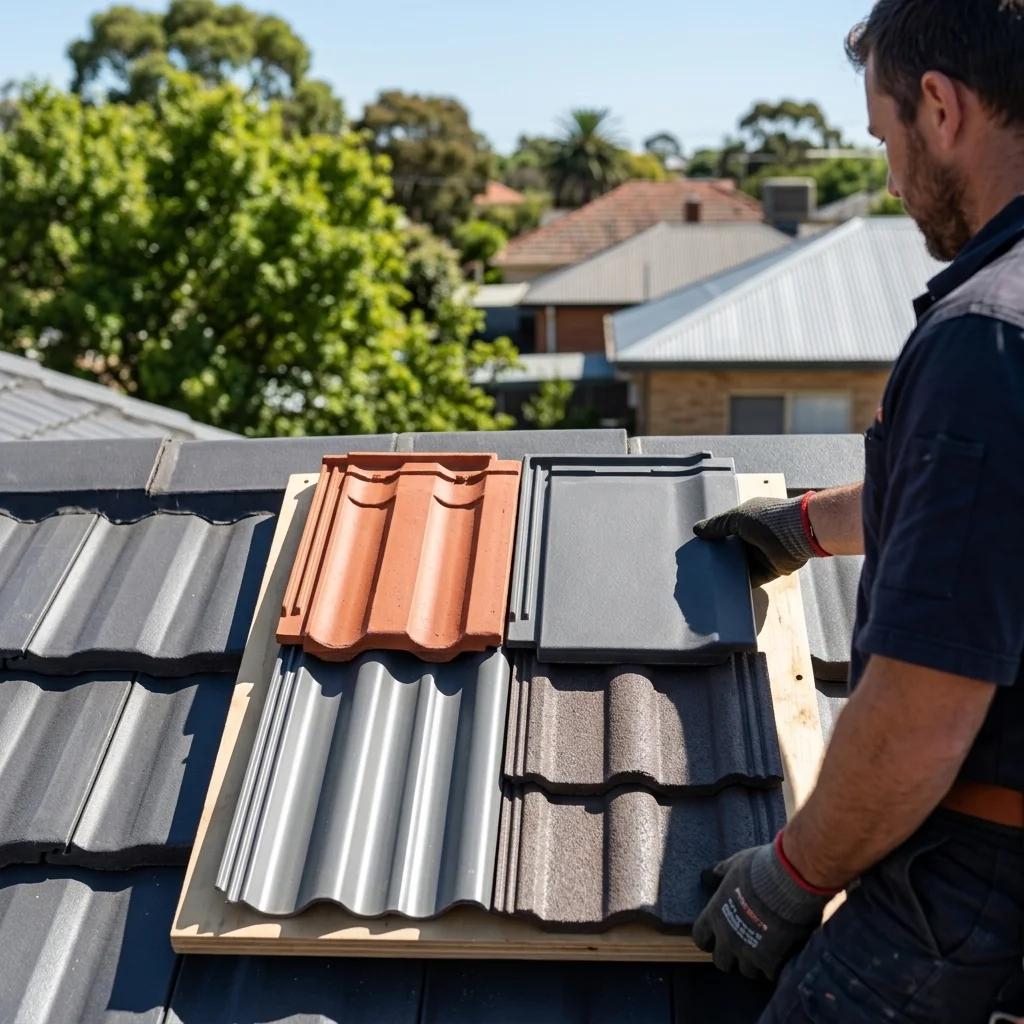
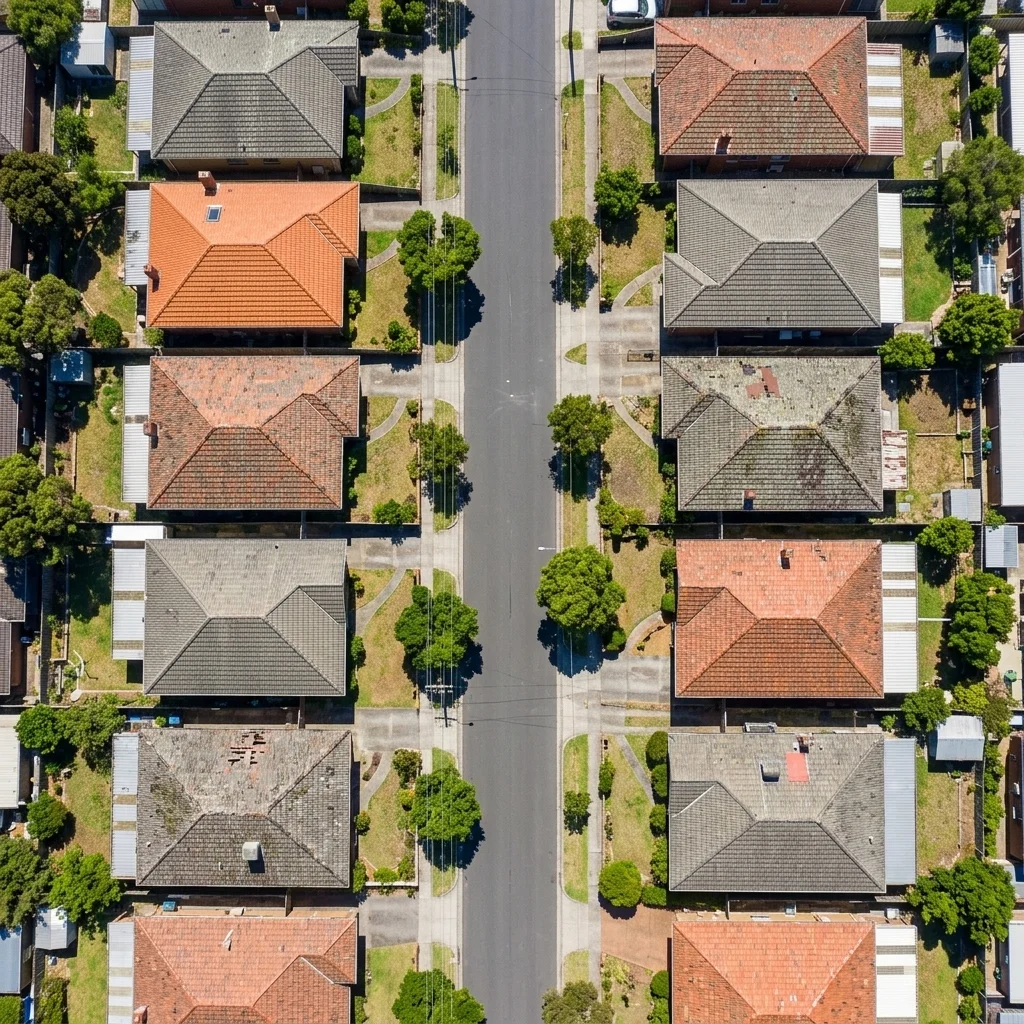
Walk down any street in Reservoir, Thomastown, or Coburg and you will notice that almost every roof tells a slightly different story. Some are faded but intact. Some have cracked ridge caps or dark moss patches. Others look freshly restored with a clean, uniform colour. The difference almost always comes down to the type of tile and how well it has been maintained over the years.
Understanding the types of roof tiles in Australia matters because each material ages differently, fails differently, and requires a different approach to restoration and repair. What works for a concrete tile roof does not necessarily apply to terracotta, and getting that wrong can cost you.
The Main Types of Roof Tiles Used in Australian Homes
1. Concrete Roof Tiles
Concrete tiles are the most widely used roof tile type in Australia, particularly across Melbourne’s suburban housing stock built from the 1970s onwards.
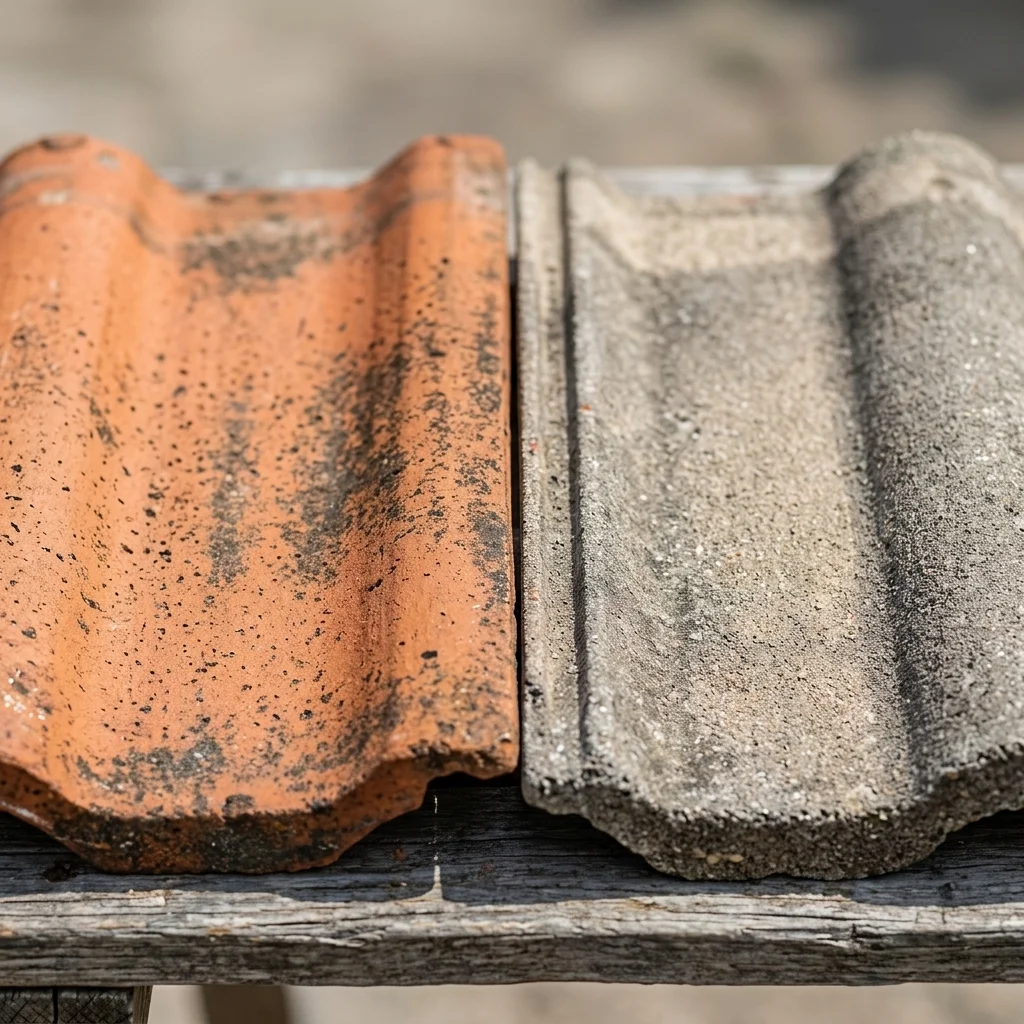
They are made from a mixture of sand, cement, and water, pressed into shape and coated with a surface colour finish. That colour finish is what makes them vulnerable over time.
Key characteristics:
- Lifespan of 30 to 50 years with proper maintenance
- Surface coating fades within 5 to 10 years of installation
- Porous surface absorbs moisture once the coating breaks down
- Susceptible to moss, lichen, and algae growth as porosity increases
- Ridge caps require repointing every 10 to 15 years
Concrete tiles are durable and cost-effective, but they need active maintenance to reach their full lifespan. A roof that has never been cleaned, repainted, or repointed will show significant deterioration well before the 30-year mark.
For homes in the northern suburbs with concrete tile roofs showing fading or surface cracking, a concrete tile roof restoration returns both the protective surface coating and the structural integrity of the ridge line.
2. Terracotta Roof Tiles
Terracotta tiles are made from natural clay and fired at high temperatures. They have been used in Australian residential construction for well over a century and are particularly common in homes built before the 1970s across Melbourne’s inner and middle northern suburbs.
Key characteristics:
- Lifespan of 50 to 100 years or more when properly maintained
- Naturally dense and non-porous, resisting moisture absorption
- Colour is fired into the clay, not surface-coated, so it does not fade the same way concrete does
- Heavier than concrete, requiring appropriate roof structure
- Ridge caps and bedding still require repointing over time
Terracotta is the premium performer in terms of longevity. However, that does not mean it is maintenance-free. The tiles themselves hold up exceptionally well, but the mortar bedding around ridge caps deteriorates and the surface accumulates biological growth over decades.
“Terracotta tiles on a well-maintained roof can genuinely outlast the building itself. The tiles are not usually the problem. It is almost always the ridge capping and repointing that needs attention first.” — Roofing specialist, Melbourne northern suburbs
Terracotta roofs benefit from periodic professional cleaning to remove moss and biological growth, and from repointing work to keep the ridge line structurally secure. The terracotta roof painting service from a northern suburbs roofing specialist covers the specific products and techniques required for this tile type.
3. Colorbond Steel Roofing
Colorbond is a painted steel roofing product manufactured by BlueScope Steel. While not technically a tile, it is included here because it is one of the most common roof types across Australia and increasingly appears as a replacement material in restoration projects on Melbourne suburban homes.
Key characteristics:
- Lifespan of 40 to 70 years with minimal maintenance
- Lightweight, requiring less structural support than tile
- Does not require repointing as there are no ridge caps in the traditional sense
- Paint finish can fade and chalk over time, particularly in high UV areas
- Susceptible to denting under hail impact
Colorbond is lower maintenance than tiled roofs but not entirely maintenance-free. It benefits from periodic cleaning and inspection of flashings, ridges, and penetrations.
4. Slate Roof Tiles
Slate is a natural stone tile most commonly found on heritage homes and period properties built in Melbourne’s inner northern suburbs during the Victorian and Edwardian eras.
Key characteristics:
- Longest lifespan of any roofing material, often 100 years or more
- Extremely heavy, requiring reinforced roof structure
- Individual tiles can crack or slip over time, requiring specialist repair
- Sourcing matching replacement slate for repairs can be difficult and expensive
- Not commonly installed on new homes due to cost and structural requirements
Slate roofs in the northern suburbs are rare and typically require specialist assessment rather than standard restoration work.
Comparing the Main Roof Tile Types
| Tile Type | Typical Lifespan | Maintenance Level | Common Issues | Restoration Applicable |
|---|---|---|---|---|
| Concrete | 30 to 50 years | Medium | Fading, moss, cracked ridge caps | Yes, commonly |
| Terracotta | 50 to 100+ years | Low to medium | Ridge cap deterioration, moss | Yes, ridge and cleaning |
| Colorbond | 40 to 70 years | Low | Faded paint, flashing issues | Partial, cleaning and coating |
| Slate | 100+ years | Low but specialist | Cracked or slipped tiles | Specialist repair only |
Which Tile Type Is Most Common in Melbourne’s Northern Suburbs?
The northern suburbs of Melbourne, including areas such as Thomastown, Reservoir, Preston, Coburg, Bundoora, and Keilor, were largely developed between the late 1950s and early 1990s. This means the dominant tile type across the area is concrete, with a significant proportion of terracotta on homes built before 1975.
Both tile types are well past their initial surface coating lifespan on most of these homes, which is why the northern suburbs consistently generate high demand for roof cleaning, repointing, and full restoration work.
Understanding your tile type is the starting point for any honest conversation about what your roof actually needs.
How Your Tile Type Affects What Restoration Work Is Required
Concrete tiles typically need:
- Pressure cleaning to remove biological growth
- Surface repainting to restore the protective coating
- Ridge cap repointing to reseal the mortar along the ridge line
- Individual tile replacement where cracking has occurred
Terracotta tiles typically need:
- Soft wash or low-pressure cleaning to avoid tile damage
- Repointing of ridge caps with flexible polymer-based compound
- Specialist paint products that allow the tile to breathe
- Periodic inspection for cracked or slipped tiles
Both tile types benefit from regular roof cleaning to slow biological growth and from roof repointing and rebedding to keep the ridge line structurally sound.
If you are unsure which tile type you have or what condition your roof is actually in, a professional roof assessment in Melbourne from a local roofing specialist will give you a clear picture before any work is committed to.