Roof Ventilation Melbourne: Types, Costs and Why It Matters

Roof Ventilation Melbourne

Quick Overview:

Roof ventilation Melbourne: everything in 30 seconds

  • Roof ventilation removes heat and moisture from your roof cavity, protecting your home’s structure and reducing energy costs
  • Melbourne sits in NCC Climate Zone 6, making ventilation mandatory for new builds and major renovations under current and upcoming NCC 2025 rules
  • Poor ventilation causes mould, timber rot, ceiling stains, and energy inefficiency
  • The four main options are whirlybirds, solar vents, ridge vents, and eave or soffit vents
  • A whirlybird costs around $250 to $350 installed; solar vents cost $550 to $1,000 installed
  • Most northern suburbs homes need two to three vents depending on roof size
  • Warning signs include hot upper floors in summer, ceiling staining, and mould smell near the roof hatch
  • A local roofing professional can assess your roof and recommend the right solution

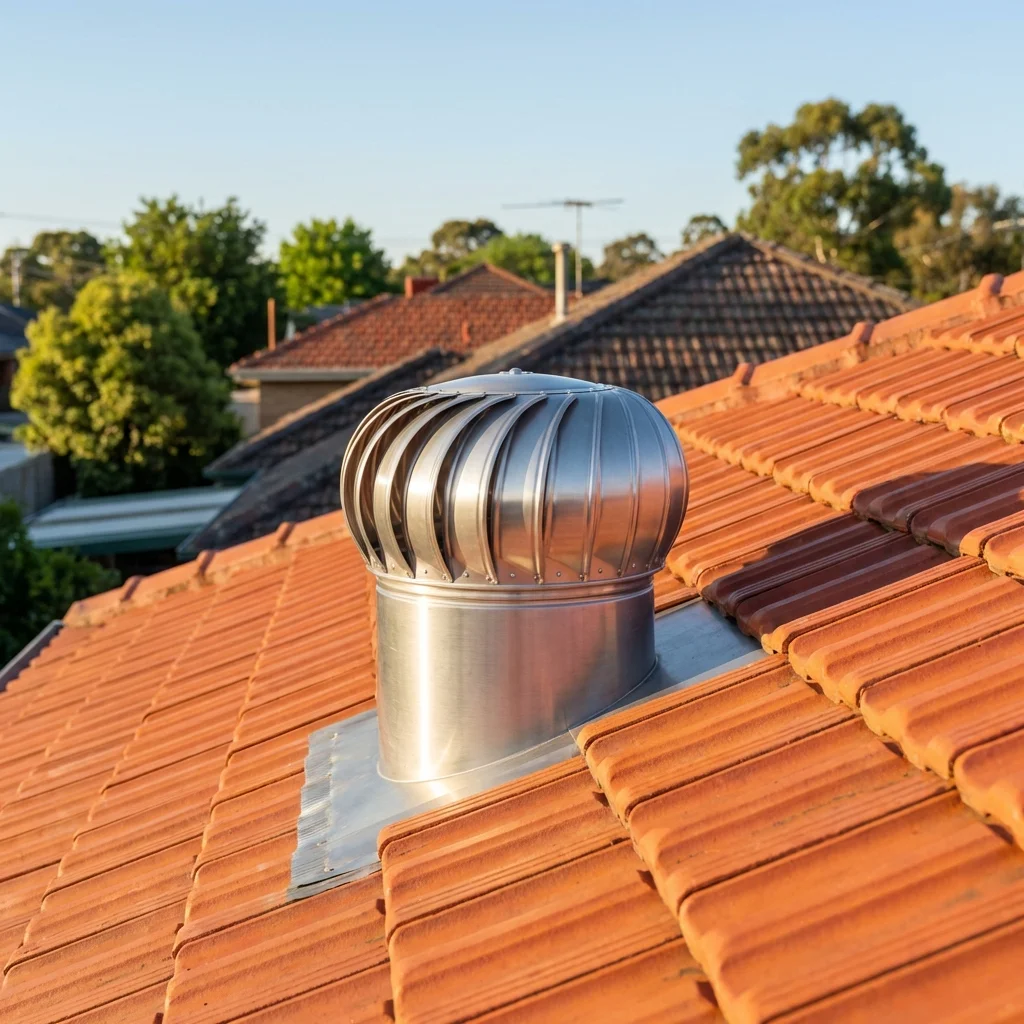
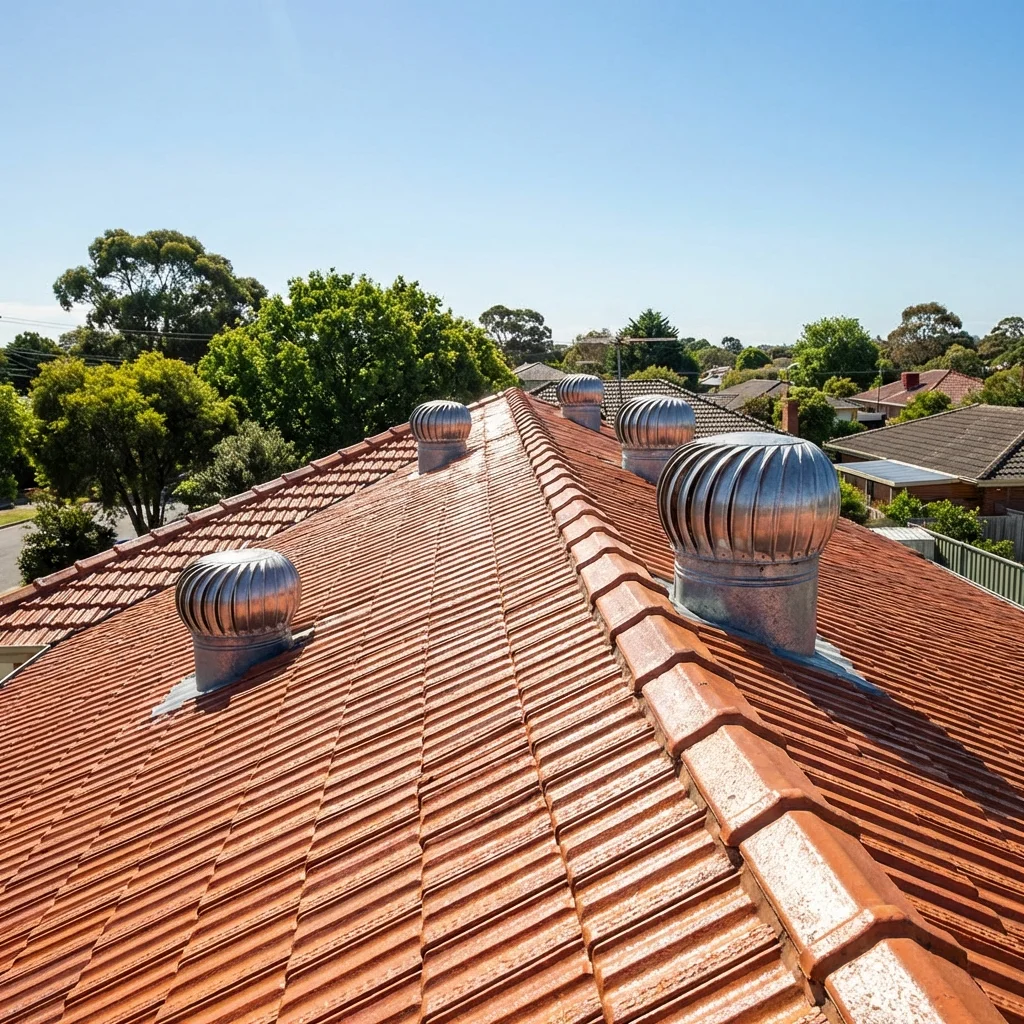
Melbourne tiled roof whirlybird ventilation sunny day suburban

Why Roof Ventilation Matters for Melbourne Homes

Melbourne’s climate makes ventilation more critical here than in many other parts of Australia. Suburbs across the northern corridor including Coburg, Preston, Reservoir, Bundoora, Epping, and Craigieburn experience some of the sharpest seasonal swings in Victoria. Summer days push roof cavity temperatures well past 60 degrees Celsius. In winter, cold nights create the perfect conditions for moisture to condense inside an unventilated roof space.

The result is a roof cavity that overheats in summer and saturates with moisture in winter, neither of which your insulation, timber framing, or roofing materials are designed to handle for extended periods.

Here is what poor ventilation actually causes:

  • Timber rot in roof frames, battens, and structural members
  • Rust on metal straps, nail plates, and fixings throughout the roof cavity
  • Mould and mildew growth that spreads to insulation and ceiling plaster
  • Ceiling staining and paint failure on eaves and soffits
  • Insulation degradation that reduces its thermal performance
  • Higher summer cooling costs as heat radiates back into living spaces

“Most homeowners we visit in the northern suburbs have never thought about roof ventilation until they see a stain on the ceiling or get hit with a massive power bill in February. By that point, the moisture has usually been building up for years.”

Signs Your Melbourne Home Has a Ventilation Problem

You do not need to access your roof cavity to know something is wrong. Most ventilation problems produce visible signs inside and outside the home that are easy to spot once you know what to look for.

Watch for these warning signs:

  • Excessive heat on upper floors in summer, particularly in bedrooms directly below the roof
  • Ceiling stains or yellowing that appear without any obvious roof leak
  • Mould or musty smell when you open the roof hatch or in rooms on the top floor
  • Peeling or bubbling paint on eaves and soffits, which indicates moisture escaping from a saturated roof cavity
  • High summer energy bills despite having adequate ceiling insulation in place
  • Condensation inside the roof hatch or on timbers when you inspect the cavity in winter
  • Sagging or discoloured insulation batts visible from the roof access point

Any one of these warrants a proper look. Several together suggest the roof cavity has been poorly ventilated for a meaningful period of time. For more on what to watch for across your whole roof, see the signs of roof damage Melbourne guide and the identify roof damage early checklist.

Types of Roof Ventilation Available in Melbourne

There is no single solution that works for every home. The right ventilation option depends on your roof type, pitch, suburb, and the size of your roof cavity. Here is a practical comparison:

Ventilation TypeHow It WorksBest ForInstalled Cost (approx.)
Whirlybird (wind-driven)Wind spins a turbine that draws hot air outStandard pitched tiled and metal roofs$250 to $350 per unit
Solar roof ventSolar panel powers a fan for consistent extractionHot areas, low-wind suburbs, larger cavities$550 to $1,000 per unit
Ridge ventContinuous vent along the roof peak, passive airflowModern metal roofs, new builds$90 to $150 per linear metre
Eave or soffit ventIntake vent at the roof edge draws cooler air inUsed alongside exhaust vents for balanced flow$30 to $80 per unit
Electric powered ventMotor-powered fan for maximum extractionFlat or low-pitch roofs, heavy condensation issues$600 to $1,200 per unit

For most older tiled homes in Melbourne’s northern suburbs, two to three quality whirlybirds combined with eave intake vents is a cost-effective and proven starting point. Ventilation only works properly when there is a balanced intake and exhaust system. Installing exhaust vents without intake vents is one of the most common installation mistakes that significantly reduces effectiveness.

For dedicated whirlybird installation in the northern suburbs, see the whirlybird installation Melbourne service page.
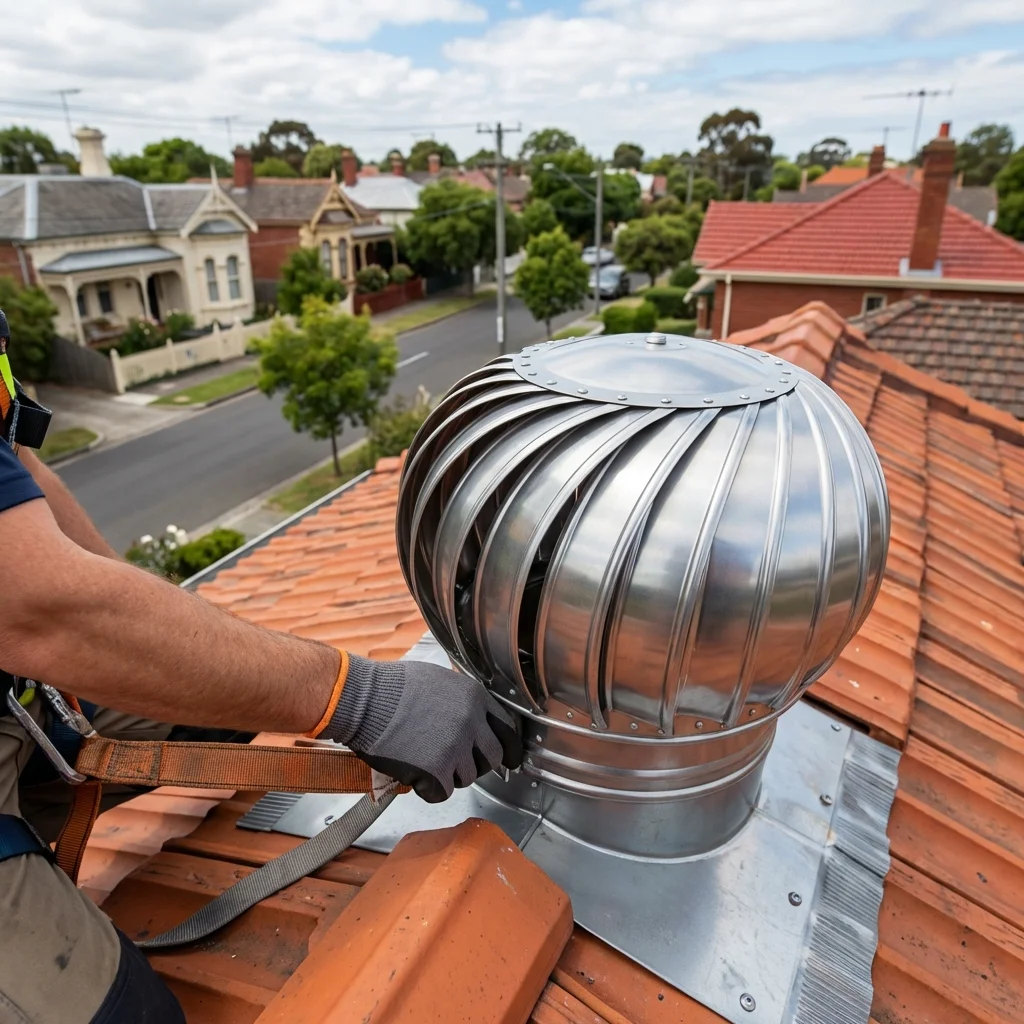
roofing contractor installing whirlybird roof vent tile roof Australia

Roof Ventilation and NCC 2025: What Melbourne Homeowners Should Know

The rules around roof ventilation are tightening. Melbourne sits in NCC Climate Zone 6, which has required roof space ventilation for new builds and major renovations under the National Construction Code (NCC) 2022. From 2026, NCC 2025 extends these requirements further, with stricter minimum ventilation area calculations and mandatory compliance for a wider range of projects.

What this means practically for northern suburbs homeowners:

  • If you are planning a full roof replacement, ventilation compliance will be required
  • If you are doing a major renovation that involves the roof structure, ventilation must meet current standards
  • Older homes with no existing ventilation system are not required to upgrade for general maintenance, but it remains strongly advisable from a structural protection standpoint

For anyone planning a restoration, replacement, or significant repair job, discussing ventilation as part of the scope is worth doing from the outset rather than as an afterthought. For a broader look at what a restoration involves, see the roof restoration Melbourne service page.

How Roof Ventilation Connects to the Rest of Your Roof’s Health

Ventilation does not work in isolation. A well-ventilated roof cavity extends the life of every other component on your roof. Here is how it connects to common roofing services:

Roof insulation: Moisture-damaged insulation loses its thermal rating and needs to be replaced. Ventilation protects your insulation and makes it perform as rated. See the roof insulation Melbourne page for more.

Leaking roof repairs: Some homeowners assume a dripping ceiling is a roof leak when it is actually condensation from a poorly ventilated cavity. Ventilation resolves this before an unnecessary repair is ordered. See the leaking roof repairs Melbourne page if you are dealing with this situation.

Roof sealing and restoration: A roof that is sealed or restored without addressing underlying ventilation issues may see premature paint and coating failure as trapped moisture pushes back through the surface. See the roof sealing Melbourne service.

Solar panels: If you are planning solar installation, ventilation helps regulate roof cavity temperature and protects the structural integrity of the roof that your panels will be mounted on. See the solar panels Melbourne and roof restoration connection explained.

Winter preparation: Roof ventilation is one of the key steps in getting a roof ready for Melbourne’s wet winters. See the how to prepare your roof for winter guide.


Melbourne Northern Suburbs · NCC Zone 6

Roof Ventilation Melbourne:
The Complete Picture

Why it matters, what it costs, and when to call a professional

1
Why it matters
60°C+
Roof cavity temperature on a Melbourne summer day
10L+
Moisture that can accumulate in roof cavities each winter
Mould
Grows in damp unventilated cavities, spreads to ceilings
25%
Potential reduction in summer cooling costs with good ventilation
2
Warning signs to watch for
Excessive heat on upper floors even with air conditioning running in summer
Ceiling stains or yellowing without an obvious roof leak above
Mould or musty smell near the roof hatch or on the top floor
Peeling or bubbling paint on eaves and soffits from moisture escaping
High summer energy bills despite adequate ceiling insulation being in place
3
Ventilation types and installed costs
Whirlybird (wind-driven)
Most common choice for tiled roofs. Works without electricity. Best with eave intake vents.
$250 to $350
Solar roof vent
Consistent extraction even on still days. Better for larger cavities and hotter suburbs.
$550 to $1,000
Ridge vent (continuous)
Runs along the roof peak. Passive, silent, invisible from the street. Suits modern metal roofs.
$90 to $150/m
Eave or soffit vent (intake)
Draws fresh cooler air in at the roof edge. Essential for balanced ventilation with any exhaust vent.
$30 to $80
4
NCC Climate Zone 6: Melbourne's compliance rules
Melbourne is in NCC Climate Zone 6
NCC 2022
Roof space ventilation mandatory for all new builds and major renovations in Zone 6
NCC 2025
Extended requirements from 2026: stricter minimum vent area calculations for pitched roofs
Existing homes
Compliance not required for general maintenance, but strongly advisable for structural protection
5
When to call a roofing professional
Warning signs present Hot floors, ceiling stains, mould smell, or peeling eave paint noticed
Planning a restoration Full roof replacement or major renovation coming up
After a storm Hail, high winds, or heavy rain may have damaged existing vent units
Buying or selling Roof condition, including ventilation, affects property value and buyer confidence

When to Call a Professional Roof Ventilation Expert in Melbourne

Roof ventilation is not a complex concept, but the installation needs to be done correctly for it to work. Incorrectly positioned vents, the wrong number of units, or an unbalanced intake and exhaust ratio will give you little benefit.

Call in a professional if:

  • You have spotted any of the warning signs listed above
  • You are planning a roof restoration, replacement, or major repair
  • You are preparing your home for sale and want the roof cavity in good condition
  • You have recently had insulation installed and want to check the ventilation is adequate
  • You are concerned about energy costs in summer or condensation in winter

A professional assessment takes the guesswork out of it. The team at Roof Restoration Northern Suburbs provides roof assessments, ventilation recommendations, and full installation across Melbourne’s northern suburbs, from Coburg and Brunswick through to Epping, Bundoora, and Craigieburn.

Book a free roof assessment in Melbourne to get a clear picture of your roof’s current ventilation status.

Also relevant: the roof maintenance for homeowners guide covers the full range of routine checks that keep a roof in good condition year to year.

Frequently Asked Questions About Roof Ventilation Melbourne

  • Q1.How many roof vents does a Melbourne home actually need?

    The number depends on the size of your roof cavity. A general rule used by professional installers is one whirlybird or extraction vent per 50 square metres of roof area, combined with adequate eave or soffit intake venting. Most standard three to four bedroom homes in Melbourne's northern suburbs fall in the range of two to three extraction vents. Without a proper intake system, even well-placed extraction vents will underperform. A professional assessment is the most reliable way to determine the right number for your specific home.

  • Q2.Does roof ventilation actually reduce energy bills in Melbourne?

    Yes, measurably so. A poorly ventilated roof cavity can reach temperatures above 60 degrees Celsius on a Melbourne summer day. That heat radiates back into your living spaces, forcing air conditioners to work harder and longer to maintain a comfortable temperature. Properly ventilated roofs reduce cavity temperature by 10 to 15 degrees on average, which typically translates to a 15 to 25 percent reduction in cooling load during peak summer months. For northern suburbs homes running ducted systems, that is a meaningful saving over a full summer season.

  • Q3. Can condensation be mistaken for a roof leak?

    Yes, and it happens more often than most homeowners realise. When warm moist air from inside the home rises into a cold, poorly ventilated roof cavity in winter, it condenses on timbers, metal fixings, and insulation. This moisture can drip down and saturate ceiling plaster, creating stains and wet patches that look exactly like a roof leak. If your roofer cannot find a clear point of water entry from outside, condensation from poor ventilation is one of the first things to investigate. See the leaking roof repairs Melbourne page for more on how leaks are diagnosed.

  • Q4. Are whirlybirds still a good option in 2026, or are solar vents better?

    Whirlybirds remain one of the most cost-effective and reliable ventilation solutions for Melbourne homes. They require no electricity, have a long service life, and perform well on the windy days that are common in Melbourne's northern suburbs. Their limitation is reduced output on still days. Solar vents deliver more consistent extraction and are a better choice for larger roof cavities or homes in more sheltered suburbs where wind is less reliable. For most standard northern suburbs homes, quality whirlybirds with adequate eave venting remain a practical and proven choice. See the whirlybird installation Melbourne page for current options.

  • Q5. Does the new NCC 2025 ventilation rule affect existing Melbourne homes?

    NCC 2025 ventilation requirements apply to new construction and major renovations, not to existing homes being maintained in their current state. If you are simply replacing a few tiles, cleaning your gutters, or repointing ridge caps, you are not required to upgrade your ventilation to current code. However, if you are planning a full roof replacement or a significant structural renovation, the new roof work will need to comply with ventilation standards for Climate Zone 6. For anything involving a full restoration or replacement, it is worth discussing ventilation as part of the project scope from the start. The roof restoration Melbourne service page covers what is included in a professional restoration job.

Take Action Before the Problem Gets Worse

Hail damage to your roof does not get better with time. Every Melbourne spring brings hailstorms, strong winds and temperature swings that accelerate the deterioration of cracked tiles and dented metal roofing. Every month you wait, the risk of water leaks, mould growth and structural damage increases.

The good news is that repairing hail damage in Melbourne’s northern suburbs is a well-managed, straightforward process when you work with the right team. The result is a protected roof, better water protection, improved structural integrity and complete peace of mind.

Get your roof assessed today. The hail damage roof repair specialists serving Melbourne’s northern suburbs are ready to help. Contact Roof Restoration Northern Suburbs for a professional hail damage inspection.

Get your roof assessed today. The hail damage roof repair specialists serving Melbourne’s northern suburbs are ready to help. Contact Roof Restoration Northern Suburbs for a professional hail damage inspection.

Contact us today for a free, no‑obligation roof assessment and quote.

If you want a thorough and safe roof cleaning, don’t hesitate to reach out to us for expert services. We can handle everything from roof cleaning to roof restoration.

Roof Restoration Northern Suburbs is the fastest, quickest way to find the roofing experts at your doorstep. In one simple call, you can access the skills and expertise you need.
Reviews google