Roof insulation Melbourne homes need goes far beyond just keeping warm in winter. In a city known for its “four seasons in one day” weather, proper roof insulation is your first line of defense against temperature extremes, skyrocketing energy bills, and uncomfortable living conditions. Whether you’re building new, renovating, or simply looking to improve your home’s efficiency, understanding roof insulation can save you thousands of dollars while dramatically improving your comfort.
Melbourne’s unique climate presents specific challenges. Scorching 40-degree summer days followed by frosty winter mornings mean your roof works harder than in most Australian cities. Without adequate insulation, your home becomes an oven in summer and an icebox in winter, forcing your heating and cooling systems to run constantly just to maintain livable temperatures.
This guide breaks down everything Melbourne homeowners need to know about roof insulation, from choosing the right type to understanding installation costs and long-term benefits.
Why Roof Insulation Matters in Melbourne’s Climate
Melbourne’s temperature swings are extreme. Your roof bears the brunt of these conditions, with surface temperatures reaching 60-70 degrees on hot days. Without insulation, this heat radiates directly into your living spaces, making upstairs rooms unbearable and forcing air conditioners to work overtime.
Key reasons roof insulation is essential:
- Temperature regulation: Keeps heat out in summer and warmth in during winter
- Energy cost reduction: Can cut heating and cooling costs by 40-50%
- Comfort improvement: Eliminates hot spots and cold zones throughout your home
- Condensation prevention: Reduces moisture buildup that leads to mold and structural damage
- Noise reduction: Dampens external sounds from rain, wind, and traffic
- Property value increase: Well-insulated homes command higher resale prices
The Australian Building Code requires minimum insulation standards, but meeting minimum requirements doesn’t mean optimal performance. Many older Melbourne homes have inadequate or degraded insulation that no longer performs effectively.
“We had ceiling insulation installed 15 years ago, but after a roof inspection, we discovered it had compressed and lost 60% of its effectiveness. The new insulation made an immediate difference to our comfort and our quarterly power bills dropped by $200.” – Jennifer M., Reservoir
For comprehensive roof health, combining insulation with regular maintenance ensures your entire roofing system performs at its best. Professional roof restoration and repair services in northern suburbs can assess your current insulation during routine inspections.
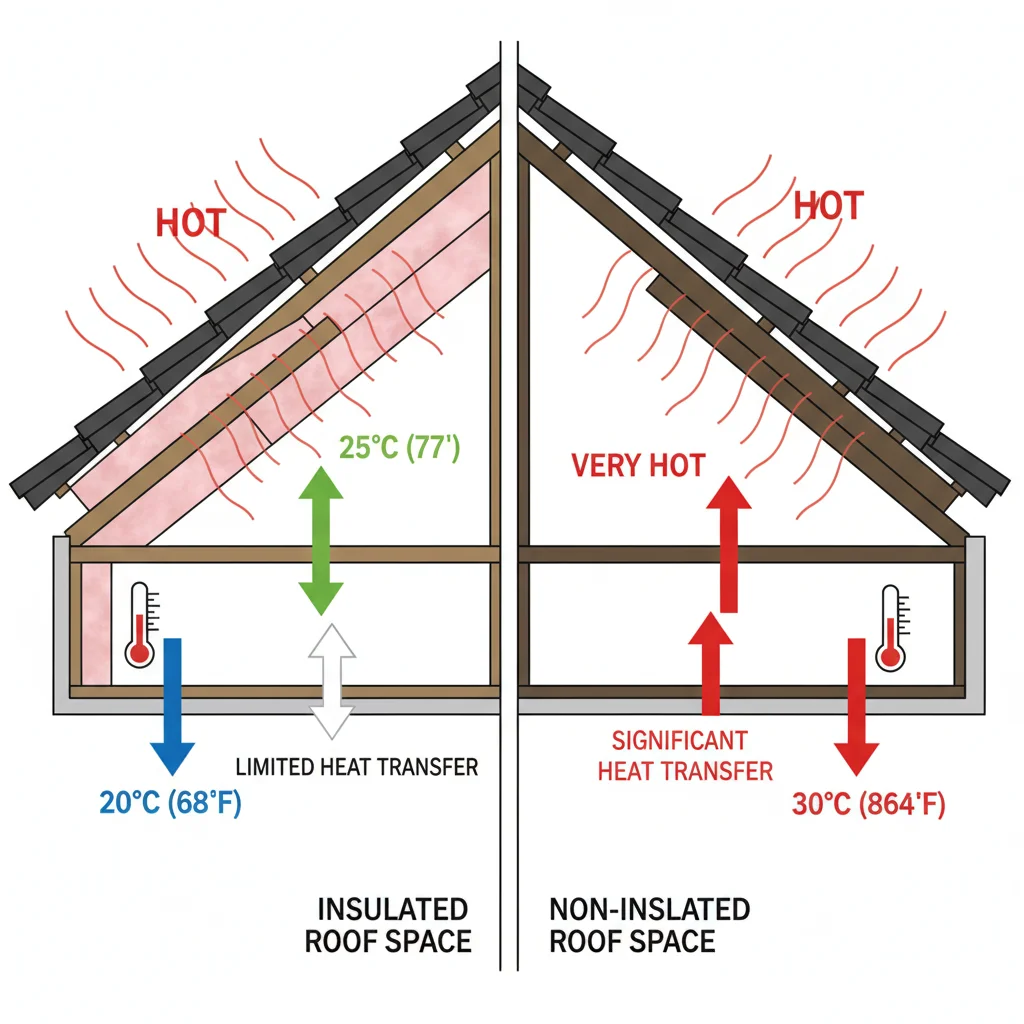
Types of Roof Insulation Available in Melbourne
Choosing the right insulation depends on your roof type, budget, climate needs, and installation constraints. Here are the main options available:
Bulk Insulation (Batts and Blankets): The most common type for residential roofs, bulk insulation comes in pre-cut batts or continuous rolls. Made from glass wool, polyester, or natural wool, these trap air pockets to slow heat transfer.
Best for: New builds, accessible roof spaces, DIY installation R-value range: R2.5 to R7.0 Cost: Most economical option
Reflective Foil Insulation: Shiny aluminum foil laminated to backing materials reflects radiant heat away from your home. Particularly effective in Melbourne’s hot summers.
Best for: Reducing summer heat gain, metal roofs, combination with bulk insulation R-value range: R1.5 to R2.5 (higher when combined with air gaps) Cost: Mid-range pricing
Spray Foam Insulation: Polyurethane foam sprayed directly onto roof surfaces, expanding to fill gaps and create a seamless barrier. Offers excellent air sealing properties.
Best for: Irregular spaces, cathedral ceilings, maximum performance R-value range: R3.5 to R7.0 per inch Cost: Premium option with highest performance
Loose-Fill Insulation: Blown into roof cavities using specialized equipment. Made from recycled paper, glass wool, or mineral wool.
Best for: Existing homes, hard-to-reach areas, topping up old insulation R-value range: R2.5 to R4.0 Cost: Mid-range pricing
Understanding R-Values for Melbourne Homes
R-value measures insulation’s resistance to heat flow. Higher R-values mean better insulation performance. Melbourne’s climate zone requires specific R-values for optimal efficiency:
| Location in Home | Minimum R-Value | Recommended R-Value |
|---|---|---|
| Ceiling (Zone 6) | R4.1 | R5.0 – R6.0 |
| Walls | R2.8 | R3.0 – R4.0 |
| Underfloor | R1.5 | R2.0 – R2.5 |
Northern suburbs of Melbourne fall into climate zone 6, which experiences cold winters and hot summers. This means ceiling insulation should prioritize higher R-values to combat both temperature extremes effectively.
Don’t assume more is always better. Over-insulating without proper ventilation can trap moisture, leading to condensation problems and reduced insulation performance. Professional installers balance insulation levels with adequate roof ventilation for optimal results.
The Real Cost of Poor or Missing Insulation
Many Melbourne homeowners don’t realize how much inadequate insulation costs them annually. Let’s look at the numbers:
Energy Bill Impact: A typical Melbourne home without ceiling insulation can spend $1,500-$2,500 annually on heating and cooling. With proper R5.0 or R6.0 insulation, these costs typically drop to $800-$1,300, saving $700-$1,200 every year.
Comfort Costs: Beyond dollars, poor insulation means:
- Temperature differences of 10-15 degrees between rooms
- Air conditioners and heaters running constantly
- Inability to use upstairs rooms comfortably in summer
- Drafts and cold spots in winter
Hidden Damage: Inadequate insulation contributes to:
- Condensation and moisture buildup
- Mold growth in roof spaces
- Structural timber damage from moisture
- Degraded roof materials from temperature extremes
These issues often require expensive repairs that could have been prevented with proper insulation from the start.
Signs Your Melbourne Home Needs Better Roof Insulation
Not sure if your insulation is up to scratch? Watch for these warning signs:
High energy bills: If your quarterly power bills keep climbing despite similar usage patterns, poor insulation is likely to blame.
Inconsistent room temperatures: Upstairs bedrooms significantly hotter or colder than downstairs rooms indicates heat transfer through the roof.
Your HVAC system never stops: Constantly running heating or cooling that struggles to maintain comfortable temperatures suggests inadequate insulation.
Ice dams in winter: Icicles forming along roof edges mean heat is escaping through your roof, melting snow that refreezes at the eaves.
Visible insulation damage: If you can access your roof space, look for compressed, wet, or missing insulation batts.
Old or non-existent insulation: Homes built before 2000 often have minimal insulation that doesn’t meet current standards.
Drafts and air leaks: Feeling air movement near ceiling fixtures or hatches indicates gaps in your insulation barrier.
A professional roof inspection can accurately assess your current insulation condition and recommend improvements. Roof restoration and repair services in northern suburbs typically include insulation assessment as part of comprehensive roof evaluations.
Professional Installation vs. DIY: What You Need to Know
While some homeowners consider DIY insulation installation to save money, several factors make professional installation worthwhile:
Safety concerns:
- Roof spaces reach extreme temperatures (50+ degrees in summer)
- Risk of falling through ceilings
- Electrical hazards from wiring in roof cavities
- Insulation dust and fibers can cause respiratory issues
- Proper protective equipment is essential
Installation quality:
- Professionals ensure complete coverage without gaps
- Correct installation around electrical fixtures and vents
- Proper compression avoidance (compressed insulation loses R-value)
- Integration with existing ventilation systems
- Compliance with building codes and safety standards
Time and efficiency: A professional team completes most residential installations in 4-8 hours. DIY attempts often take multiple weekends and may still leave gaps or errors that reduce performance.
Warranty and insurance: Professional installations include warranties on materials and workmanship. DIY installations void material warranties and may not be covered by home insurance if issues arise.
For Melbourne homeowners, the investment in professional installation typically pays for itself within 2-3 years through energy savings and guaranteed performance.
Combining Insulation with Roof Restoration
Roof insulation works best as part of a comprehensive approach to roof health. If your roof is due for maintenance or restoration, addressing insulation simultaneously makes practical and financial sense:
Coordinated improvements:
- Replace or upgrade insulation while roof is being worked on
- Address ventilation alongside insulation installation
- Inspect and repair roof structure before insulating
- Ensure proper vapor barriers and moisture management
Cost efficiency: Combining projects eliminates duplicate labor costs for accessing roof spaces. You pay once for setup, safety equipment, and cleanup rather than twice for separate projects.
Holistic performance: A properly restored roof with quality insulation delivers maximum energy efficiency and comfort. Each component supports the others for optimal long-term performance.
When considering roof work, consult with experienced roof restoration and repair services in northern suburbs about incorporating insulation upgrades into your project scope.
Roof Insulation and Melbourne’s Energy Regulations
Victoria has specific energy efficiency requirements for new homes and major renovations. Understanding these regulations helps ensure compliance and optimal performance:
New construction: Must meet 6-star energy rating minimum, with ceiling insulation playing a crucial role in achieving this standard.
Renovations and additions: Any work requiring a building permit must bring affected areas up to current insulation standards.
Rental properties: From 2024, rental properties must meet minimum energy efficiency standards, including adequate ceiling insulation.
Staying ahead of these requirements protects your investment and ensures your home remains compliant with evolving standards.
How to Choose the Right Insulation for Your Home
Selecting appropriate insulation involves balancing several factors:
Consider your roof type:
- Tile roofs: Bulk batts or reflective foil
- Metal roofs: Reflective foil or spray foam
- Flat roofs: Spray foam or rigid board insulation
Assess your budget:
- Economy: Glass wool batts (R4.0-R5.0)
- Mid-range: Polyester batts or foil combination
- Premium: Spray foam for maximum performance
Evaluate your goals:
- Summer cooling priority: Reflective foil systems
- Winter heating focus: High R-value bulk insulation
- Soundproofing needs: Dense acoustic insulation
- Fire safety concerns: Non-combustible materials
Check accessibility: Difficult roof spaces may require blown-in loose-fill rather than batts, while accessible areas offer more installation options.