Hail Damage Roof Repair Melbourne: Expert Restoration for Northern Suburbs
- Blog
- March 25, 2026
Quick Overview:
Hail damage to roofs is serious and often invisible. During Melbourne’s spring and summer hail seasons, hailstones can crack tiles, dent metal roofing, and loosen protective coatings without showing obvious damage from ground level. Most homeowners don’t realize their roofs are damaged until leaks develop weeks or months later.
Signs of hail damage include: Missing or cracked roof tiles, dents on metal roofing and gutters, granule loss visible in gutters, lifted flashing, and damaged roof penetrations like skylights and vents. Small pea-sized hail can cause damage; larger hailstones cause structural problems.
Why fast repair matters: Hidden hail damage allows water to seep through, causing mould growth, electrical hazards, insulation damage, and costly structural decay. Insurance typically covers hail damage claims, but repairs must begin promptly to prevent water damage.
Table of Contents
ToggleWhat you should do: Contact a licensed roofing specialist immediately after a hailstorm for a free inspection. Most home insurance policies cover hail damage, and professional roofers like Roof Restoration Northern Suburbs handle the entire insurance claim process for you, making the experience stress-free. Our team provides documentation, photographs, and expert reports your insurer needs.
This blog covers: Types of hail damage, how to identify it, why repairs can’t wait, insurance claim processes, and how professional restoration protects your home’s value. Read on for everything you need to know about hail damage roof repair in Melbourne’s northern suburbs.
How Hail Damage Impacts Your Roof: What Happens When Hailstones Hit
Melbourne sits in one of Australia’s most active hail corridors. Spring and early summer bring unpredictable severe storms with hailstones ranging from pea-sized to golf ball-sized, each capable of puncturing, cracking, and denting roofing materials.
When hailstones impact your roof at high velocity, they create several problems:
Cracked and Broken Tiles
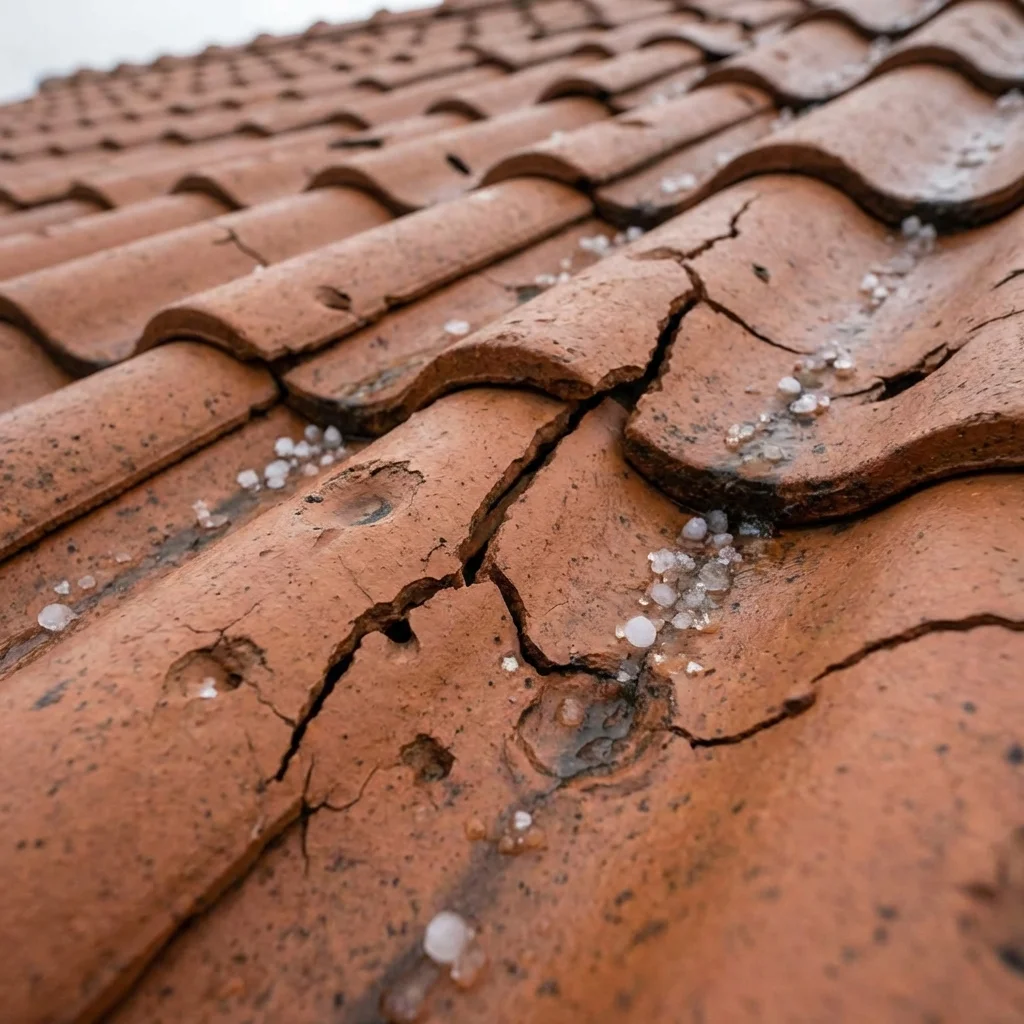
Concrete or terracotta roof tiles are brittle. Direct hail impacts cause visible cracks that weaken structural integrity. Even tiles that don’t crack may develop hairline fractures invisible from the ground. These micro-fractures become entry points for water, leading to leaks that worsen over months.
Dented Metal Roofing
Colorbond and metal roofs dent easily under hail impact. While dents may seem cosmetic, they disrupt water flow and can trap moisture that causes rust and deterioration from below. Larger dents can actually puncture metal panels, creating immediate leak points.
Granule Loss and Coating Damage
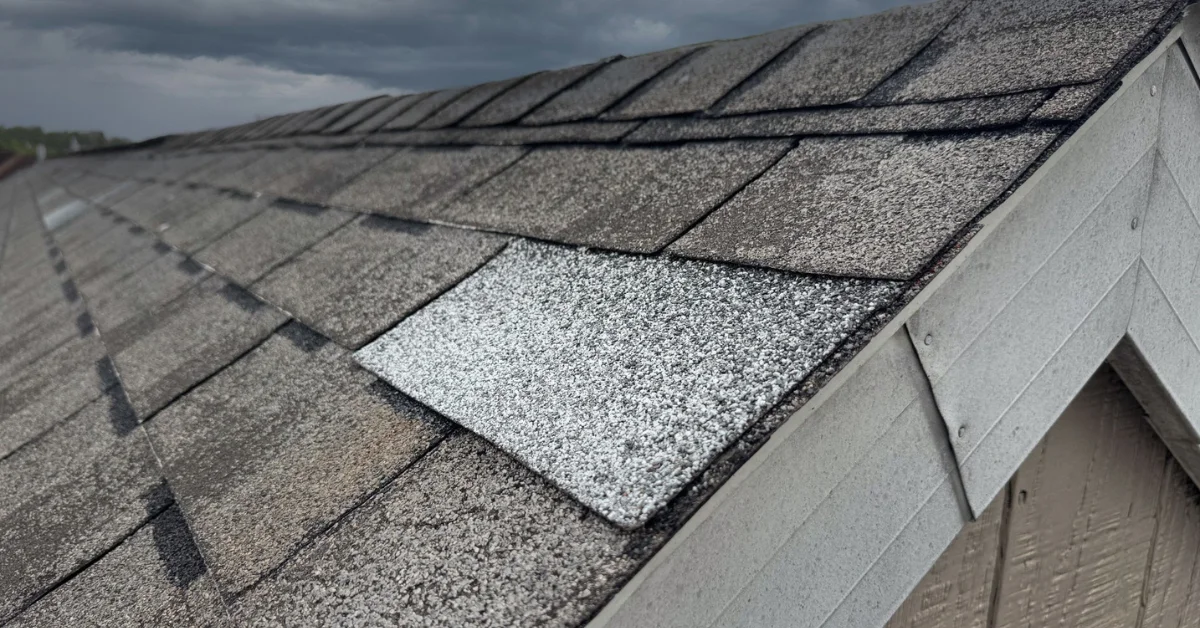
Asphalt shingles and some coated tiles lose protective granules when struck by hail. This loss of granule coverage reduces the material’s ability to reflect UV rays and shed water. You’ll often find a collection of granules in gutters after a hailstorm, which is a clear sign of damage.
Flashing and Penetration Damage
Roof flashings around chimneys, vents, skylights, and pipes are vulnerable points. Hail can lift flashing, tear sealant, or dislodge boot collars that protect pipe vents. This damage often goes unnoticed until water begins seeping around the penetration.
Quote: “Hidden hail damage is one of the biggest risks homeowners face. Small damage today becomes major structural problems within months if left unrepaired.” – Building Code Victoria, Roofing Standards
Identifying Hail Damage: Signs You Shouldn’t Ignore
Many homeowners don’t realize their roofs are hail damaged because the damage isn’t always visible from ground level. Professional roofers know exactly what to look for. Here’s what you should check if a hailstorm has passed over your home:
TABLE:
| Type of Roof Material | What Hail Damage Looks Like | Risk Level |
|---|---|---|
| Concrete or Terracotta Tiles | Visible cracks, chips, broken edges, missing pieces | High – cracks allow immediate water entry |
| Colorbond Metal Roofing | Dents, punctures, loose fasteners, rust spots forming | Medium – dents trap water and cause rust |
| Asphalt Shingles | Granule loss visible in gutters, bald spots, soft indents | Medium – progressive deterioration follows granule loss |
| Gutters and Downpipes | Visible dents, bent sections, cracks in seams | High – blocked gutters cause water overflow damage |
| Flashing and Vents | Lifted or separated flashing, cracked boot collars, missing sealant | High – allows water penetration around penetrations |
Physical Signs You Can See From the Ground
- Granules in gutters: After a hailstorm, check your gutters and downpipes. Excessive granules indicate hail damage to shingles or coated tiles.
- Debris scatter: Broken tile pieces or pieces of roofing material in your yard or on the ground near your home.
- Cracked window panes: If skylights or roof windows are cracked, hail damage to the roof surface is almost certain.
- Water stains appearing: Interior ceiling stains developing days or weeks after a hailstorm indicate hidden roof damage.
Professional Inspection Catches Hidden Damage
Licensed roofing specialists like Roof Restoration Northern Suburbs use professional techniques to identify damage homeowners miss. We climb the roof, inspect each section closely, use drones for detailed aerial photography, and check the underside of roof materials for stress fractures. This thorough approach catches damage before it becomes expensive.
Why Waiting to Repair Hail Damage Costs More Later
The biggest mistake homeowners make is waiting to repair hail damage. The thinking often goes: “The damage is minor, I’ll address it when money allows” or “It doesn’t look that bad from here.” This delay creates costly problems.
What Happens When You Delay
- Water infiltration accelerates damage: A small crack in a tile becomes a leak within weeks. Water seeps under damaged areas, soaking insulation, wetting timber frames, and promoting mould growth inside your home.
- Structural deterioration: Ongoing water damage weakens roof decking and support structures. What cost $5,000 to repair becomes a $30,000+ restoration project when structural components fail.
- Insurance complications: Most policies have claim deadlines. Waiting months to report damage can result in claim denial. Insurance companies also deny claims when damage progresses due to negligence (lack of timely repairs).
- Mould and health issues: Wet insulation and timber create ideal conditions for mould, which spreads through your home and creates serious health risks for occupants.
- Electrical hazards: Water-damaged roofs near electrical wiring create fire and shock hazards that endanger your family.
Quote: “Most roof damage claims denied by insurers involve homeowners who delayed reporting or repairs. Quick action protects both your safety and your insurance coverage.” – Insurance Council of Australia
Why Waiting to Repair Hail Damage Costs More Later
The biggest mistake homeowners make is waiting to repair hail damage. The thinking often goes: “The damage is minor, I’ll address it when money allows” or “It doesn’t look that bad from here.” This delay creates costly problems.
What Happens When You Delay
- Water infiltration accelerates damage: A small crack in a tile becomes a leak within weeks. Water seeps under damaged areas, soaking insulation, wetting timber frames, and promoting mould growth inside your home.
- Structural deterioration: Ongoing water damage weakens roof decking and support structures. What cost $5,000 to repair becomes a $30,000+ restoration project when structural components fail.
- Insurance complications: Most policies have claim deadlines. Waiting months to report damage can result in claim denial. Insurance companies also deny claims when damage progresses due to negligence (lack of timely repairs).
- Mould and health issues: Wet insulation and timber create ideal conditions for mould, which spreads through your home and creates serious health risks for occupants.
- Electrical hazards: Water-damaged roofs near electrical wiring create fire and shock hazards that endanger your family.
Quote: “Most roof damage claims denied by insurers involve homeowners who delayed reporting or repairs. Quick action protects both your safety and your insurance coverage.” – Insurance Council of Australia
Frequently Asked Questions
-
Q1.What's the difference between hail damage and storm damage on roofs?
Hail damage is caused specifically by falling hailstones and typically includes dents, cracks, and punctures concentrated in impact patterns. Storm damage encompasses wind damage (lifted tiles, blown-off sections), water damage (leaks and overflow), and debris impact (fallen branches). Some storms produce both hail and wind damage. Identification matters for insurance claims because coverage and claim processes differ slightly.
-
Q2.How quickly should I have my roof inspected after a hailstorm?
You should have your roof professionally inspected within 24 to 48 hours of a significant hailstorm. This timing is critical for several reasons: insurance claims require prompt reporting, water damage begins immediately after the storm, and your insurer may request documentation quickly. Roof Restoration Northern Suburbs provides 24-hour inspection response for hail damage claims, ensuring no delays in your repair process.
-
Q3. Will my home insurance cover hail damage roof repairs?
Most comprehensive home insurance policies in Australia cover hail damage, including repairs and replacement. However, coverage depends on your specific policy. Standard policies typically cover storm and hail damage under their "natural disaster" or "weather event" sections. Check your policy documents or call your insurer to confirm coverage. When you hire Roof Restoration Northern Suburbs for repairs, we handle insurance coordination entirely, so you don't have to navigate coverage questions alone.
-
Q4. Can you repair hail damage or do I need a full roof replacement?
Most hail damage can be repaired rather than requiring full replacement. Minor damage (a few cracked tiles, dented sections of metal roofing) is repaired by replacing damaged components. However, if hail damage is severe and widespread across your roof, replacement may be more cost-effective. Our professional inspection identifies which approach saves you money. Your insurance may also influence this decision. Roof Restoration Northern Suburbs provides honest assessments; we never recommend unnecessary replacements.
-
Q5. How much does hail damage repair typically cost in Melbourne's northern suburbs?
Hail damage repair costs depend on roof size, material type, and damage extent. Minor repairs (replacing 5-10 tiles or patching flashing) typically cost $1,500 to $3,500. Moderate damage (larger areas, multiple materials affected) ranges from $4,000 to $10,000. Extensive damage requiring structural work or full replacement runs $15,000 to $50,000+. Insurance usually covers these costs entirely, so out-of-pocket expenses are limited to your policy excess. Roof Restoration Northern Suburbs provides free inspections and written quotes before any work begins.
Take Action Before the Problem Gets Worse
Hail damage to your roof does not get better with time. Every Melbourne spring brings hailstorms, strong winds and temperature swings that accelerate the deterioration of cracked tiles and dented metal roofing. Every month you wait, the risk of water leaks, mould growth and structural damage increases.
The good news is that repairing hail damage in Melbourne’s northern suburbs is a well-managed, straightforward process when you work with the right team. The result is a protected roof, better water protection, improved structural integrity and complete peace of mind.
Get your roof assessed today. The hail damage roof repair specialists serving Melbourne’s northern suburbs are ready to help. Contact Roof Restoration Northern Suburbs for a professional hail damage inspection.
Contact us today for a free, no‑obligation roof assessment and quote.
If you want a thorough and safe roof cleaning, don’t hesitate to reach out to us for expert services. We can handle everything from roof cleaning to roof restoration.
- 0489 088 778
- info@roofrestorationnorthernsuburbs.com.au
- 32 Milleara Road Keilor East VIC 3033
- Mon-Sat : 8AM – 5PM